You can’t make a call on a plane. Not because the signal is weak, but because federal law explicitly forbids it. While the internet has shrunk the world, making it possible to video chat with a client in Tokyo while stuck in traffic in New Jersey, the sky remains a no-go zone for cellular voice and data.
It is one of the few places in modern life where the government has successfully told you to disconnect.
This isn’t just airline policy. It is a dual ban enforced by two different U.S. federal agencies. The Federal Aviation Administration (FAA) and the Federal Communications Commission (FCC) have their own distinct reasons for keeping your smartphone in airplane mode. Understanding why these restrictions exist requires looking at both the hardware in the cockpit and the infrastructure on the ground.
The FAA’s Safety Concerns
The FAA bans the use of cellular telephones on U.S. carrier aircraft. Their primary mandate is safety, and the concern here is electromagnetic interference.
Modern aircraft rely on sensitive navigation and communication systems. These systems use radio signals to talk to ground stations, satellites, and other planes. The theory is that a cell phone emitting radio waves could disrupt these delicate instruments.
No one has ever proven that a cell phone caused a crash. Yet, the risk remains theoretical enough that the FAA insists on the ban. They want to eliminate the possibility of interference, even if the probability is low.
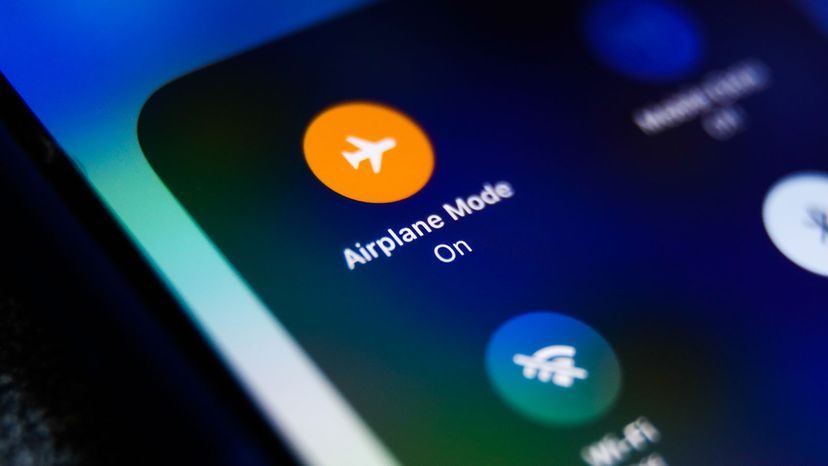
In 2013, the FAA relaxed its stance on devices, not networks. Passengers can now use laptops, tablets, and phones, provided they are in airplane mode. This feature disables the cellular radio. It keeps your Wi-Fi and Bluetooth active, but it cuts the connection to the cellular tower. By stopping the device from searching for and connecting to a cell network, the risk of interference drops significantly.
This rule is specific to the United States. Other countries have similar regulations, largely based on recommendations from aviation experts who recognize the potential for signal disruption.
The FCC’s Ground Network Issue
While the FAA worries about the plane, the FCC worries about the ground.
In 1991, the FCC banned passengers from making calls in flight. The concern wasn’t just about the aircraft’s electronics. It was about the cellular networks below.
When a plane flies at 30,000 feet, it moves fast. A single phone on board would need to hand off its signal from one cell tower to another rapidly. This creates a heavy load on the network. More importantly, the signals can penetrate the ground.
If multiple passengers on a plane started making calls, their signals could interfere with each other and with ground-based communications networks. The FCC argues that this congestion and potential interference justify the ban, regardless of what happens inside the cockpit.
The FCC has looked into allowing this. They considered a proposal for a technology that would let passengers make calls without disrupting ground networks. They rejected it in November 2020. The ban stands.
Is the Risk Real?
The rules feel archaic given how hardened modern electronics have become. Sven Bilén, a professor of engineering at Penn State, argues that the safety threat has diminished.
“Most planes nowadays are hardened,” Bilén explained in a 2018 article. He points out that manufacturers shield the airplane’s electronics with conductive materials. This shielding blocks electromagnetic interference from computers and cell phones.
There is evidence to support this. Many passengers ignore the flight attendants. They leave their phones on. They forget to switch to airplane mode. If cell phones were causing major problems, we would see crashes. We don’t.
The Bottom Line
So why do the rules persist?
Because the FAA and FCC are risk-averse. The FAA wants to protect the navigation systems. The FCC wants to protect the ground network capacity.
Flight attendants enforce these rules. They remind you to switch to flight mode. They watch the cabin. It is a ritual of compliance.
You can’t use your phone to connect to a cellular network while on a U.S. airliner. It is not a matter of convenience. It is a matter of federal regulation.
The technology might be safe. The networks might handle the load. But the laws have not caught up to the engineering. Until they do, your phone stays silent.
Why Cell Phones Fail at 36,000 Feet
The Federal Aviation Administration doesn’t have a magical detector that flags passengers holding phones to their ears mid-flight. An FAA representative clarified via email that there is no specific technology capable of identifying who might be attempting a cellular call. You will get caught, though. Not by radar. By the person sitting next to you or the flight attendant walking down the aisle. If you’re holding a device to your ear, it’s visible.
The real technical headache isn’t detection. It’s interference with ground infrastructure.
Experts like Bilén note that the theoretical risk of cell phones disrupting ground networks has actually diminished with modern equipment. The old fear was that hundreds of devices pinging towers as a plane moves at 500 mph would overwhelm the cellular system’s ability to hand off calls between cells. In practice, this rarely happens.
Here is the physics problem: cell towers point their antennas down. Their radiation patterns are focused on the ground, not the sky. At a cruising altitude of 36,000 feet, your phone cannot find a signal because it is simply outside the effective range of the tower’s beam. You are too high.
The window for interference is narrow. It opens only during descent. When an aircraft drops below 10,000 feet, it enters the zone where towers might catch a stray signal. This is the only time turning on a phone could technically cause congestion or interference for people on the ground. But even then, the connection is spotty and unstable.
The Picocell Solution
So how does in-flight cellular service actually work on airlines that offer it? It bypasses the ground towers entirely.
The secret is a picocell. Think of it as a miniature, low-power cell tower installed directly inside the aircraft. It creates a small, private network zone within the cabin. Your phone connects to the picocell, not the outside world. The picocell then routes the call over the plane’s satellite internet connection.
This technology isolates the cabin traffic from the ground network. Your call doesn’t ping towers below. It stays inside the plane’s digital ecosystem until it exits via the aircraft’s uplink.
Virgin Atlantic has used this method since the early 2010s. They provide the service, but with a geographic cutoff. Once the aircraft gets within 250 miles of the U.S. border, the cellular service is disabled. This isn’t a technical limitation. It’s a regulatory one.
The Regulatory and Cultural Wall
Technology solved the interference problem. It didn’t solve the political one.
The Federal Communications Commission spent seven years debating whether to allow cellular phones on U.S. flights. They ultimately abandoned the rule change. The opposition was massive and multi-layered.
Flight attendants, machinists, aerospace workers, and federal law enforcement officers all pushed back. Their concerns weren’t just technical. They were safety and social.
One fear lingered: terrorists using cell phones to detonate explosives remotely. While largely debunked by modern security protocols, the psychological weight of that fear remained. Another practical issue? Passengers holding phones to their ears might miss critical safety briefings from the crew.
Then there was the sheer annoyance factor. Airlines operate in confined spaces. People want to sleep. Read. Talk to their travel partner. Imagine someone next to you having a loud, private conversation at 30,000 feet. It’s a nightmare for cramped cabins.
Bilén agrees. He uses flights to catch up on emails, not to chat. “The whole idea of someone yapping next to you — that would drive me nuts,” he says.
Demand vs. Reality
Despite the bans and the noise complaints, the desire for connectivity is high. A 2017 study by Allianz Global Assistance found that 55.5% of Americans would pay for free cellular calls during an entire flight.
Their reasons were pragmatic. Emergency calls. Staying in touch with family. Coordinating pickups at the destination. Keeping work connections alive.
The technology exists. The interference risk is manageable, or non-existent, with picocells. The ground network impact is minimal outside of landing phases. Yet, the ban remains. It’s not about physics. It’s about policy, perception, and the unspoken social contract of the airplane cabin.
Until that contract changes, you’ll likely keep your phone on Airplane Mode. Or use Wi-Fi calling if the airline allows it. The ground towers are still too far away to hear you. And the FAA isn’t listening.