The funding landscape for nuclear startups is shifting, and Valar Atomics is right in the middle of the action. According to three people with knowledge of the situation, the startup is currently negotiating a new financing round at a hefty $6 billion valuation. Sequoia Capital is expected to lead this specific tranch of investment.
It is a stark jump for the El Segundo, California-based firm. Valar only recently closed a earlier round in March, which valued them at $2 billion. Back then, they secured $450 million—split between $340 million in equity debt and another $110 million. Now? They want ten times that number.
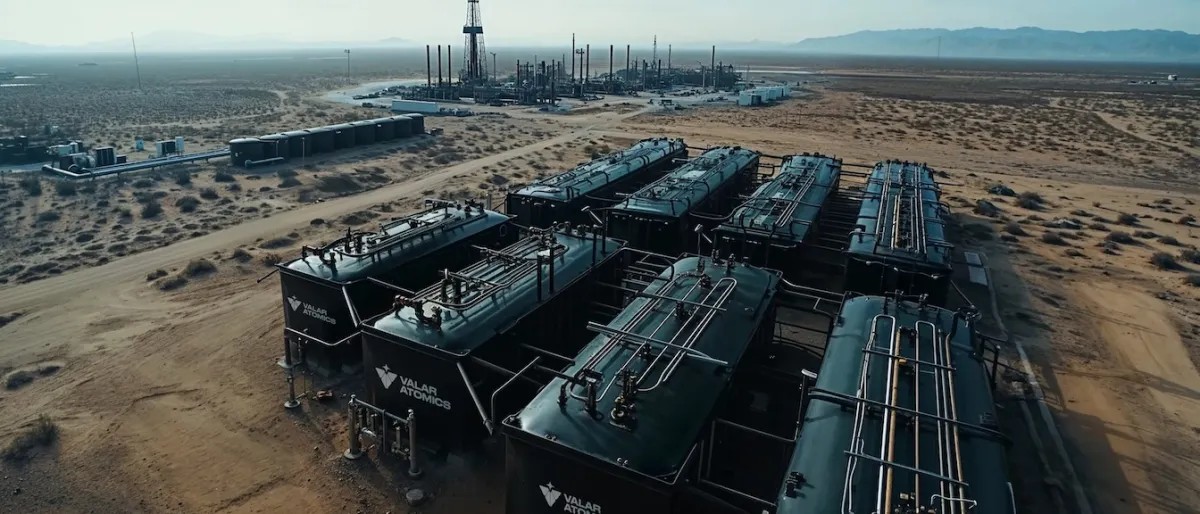
Valar Atomics seeks to fill the power gap for data centers by making nuclear energy cheap enough for tech giants to actually afford.
How Valar is structuring its valuation gap
Don’t let the single headline number fool you. The current $6 billion figure is not necessarily the price paid by every investor. The capital was raised previously at a lower tick, a messy reality common in the current AI-fueled capital markets. Deals now frequently come in tranches with varying valuations executed at different times. This structure often creates an illusion that everyone is in at the same price point. It’s not.
For an outside observer trying to benchmark Valar against peers, the difference is critical. One investor might pay half what another did for the exact same share class. It’s inefficient. But in the race for nuclear dominance, nobody has time to arbitrate the spread. Both Valar and Sequoia declined to comment on the specific financial mechanics.
The Nvidia Connection and Power Demand
Valar didn’t just talk about this in the boardroom. Earlier this month, they proved a small nuclear reactor could actually deliver electricity to an Nvidia AI chip. It was a proof-of-concept demo, small and contained, but significant. Around the same time, Valar and Nvidia signed a partnership agreement.
They want to explore nuclear energy specifically to power the insatiable hunger of future AI data centers.
Why is this happening now? Because the grid is choking. Electricity demand for these facilities is projected to explode. Utilities are years, perhaps decades, behind in adding new capacity. The vacuum is huge. Nuclear power, once dismissed as too slow and expensive, has become the only credible backup plan for tech infrastructure that refuses to pause for a sunny day.
Competing for the Nuclear Gold Rush
Valar is not alone in chasing this pie. Palmer Luckey (Anduril founder) and Palantir’s CTO Shyam Sankar are among the backers betting on this new model. But the field is crowded with well-funded rivals trying to figure out how to make small modular reactors work.
Here is who else is playing in the sand:
- Kairos Power : Building next-gen reactors aimed squarely at tech and industrial clients.
- TerraPower : Bill Gates’s reactor startup, pushing advanced designs.
- NuScale Power : The current front-runner for regulatory approval. Last year, they secured a design certification from the U.S. Nuclear Regulatory Commission for a higher-output unit. It is currently the only SMR with this stamp.
Helium, Lawyering, and Long Roads
Valar’s core technology relies on a helium-cooled, high-pressure gas reactor. They claim they can manufacture these smaller units cheaper than traditional boiling-water plants. The plan? Build hundreds. Deploy them. Power the internet.
Is it that simple? Probably not yet. The technology is still young. Manufacturing at scale requires a supply chain that barely exists today. Then there is the regulatory gauntlet.
Valar took a shot across the bow at the Nuclear Regulatory Commission (NRC) last year. Alongside several other states and startup rivals, Valar sued, arguing that the agency wastes time applying the same lumbering, billion-dollar licensing process for a small test reactor that it uses for a full-scale commercial plant. It is an absurdity of bureaucracy, in their view. The lawsuit has gone silent, with pauses suggesting a settlement is likely brewing.
So, Valar Atomics moves toward a $6 billion tag while arguing for faster approvals, all while proving to Nvidia that they can actually spin up a server room. The tech is theoretical until it is physical. The money is there. The laws are in flux.
It leaves one wondering if the grid will even be stable when the first of hundreds of reactors finally spins up.