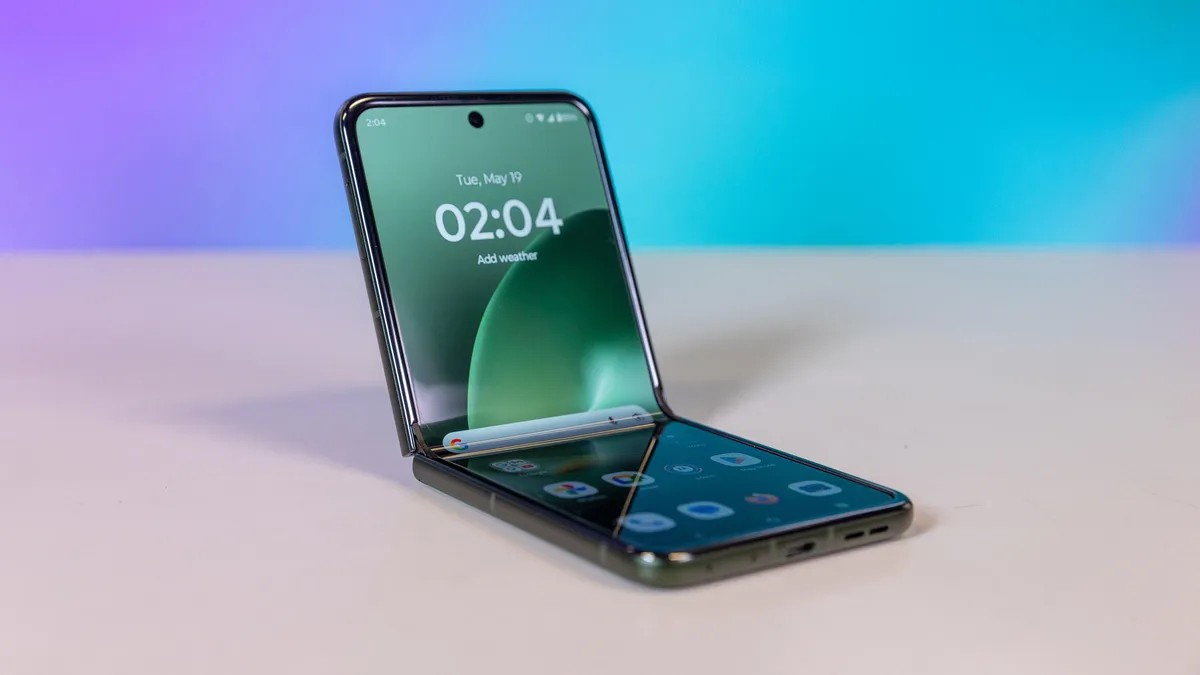
Let’s get real. Paying $1,100 for the Motorola Razr Plus (2024) feels like a reach. Especially when the standard Razr sits comfortably at $800. You pay a 300-buck premium for… what exactly?
The hardware hasn’t shifted much from previous years.
You get a bigger 3.4-inch cover screen. Fast charging (30W vs the standard’s 15W-ish equivalent, though Moto lists similar specs across the board, the Plus feels quicker in daily bursts). A slightly stronger chip—the Snapdragon 7s Gen 2—instead of the Exynos found in the cheaper model. That’s it.
Is the standard Razr worse? It’s fine. It’s capable.
But does the Plus offer enough juice to justify the price hike? Hardly.
If you’re happy with a foldable, the cheaper phone is the smarter buy.
The Design Trap
Moto’s been iterating the foldable form for a few cycles now. The result is familiar. Polished. A bit boring, perhaps, but reliable.
The cover screen on the Plus is wider. That’s the big selling point. You can actually see more of a tweet without swiping. You can type longer messages. It looks sleek when folded. The “Flex Mode” gimmick—where folding the phone halfway turns the top half into a viewfinder for video or a protractor for cooking videos—is genuinely cool. It feels less like a tech demo and more like a useful quirk once you get used to it.
Unfold it, and you’re looking at a 6.9-inch OLED panel. Bright. Colorful. Sharp. It handles web pages and video calls better than last year’s models.
But hold it in your hand? It feels thin. Fragile. You know the drill with these glass sandwiches. There’s no ruggedness here. It’s delicate tech for people who love gadgets enough to worry about them dropping.
Battery and Charge Speed
Here is where the “Plus” moniker loses its punch.
The battery is the same size. The charging speeds are roughly comparable. You might get an hour extra on a heavy day? Maybe.
But in daily testing, I never felt stranded. Both phones lasted from morning commute to evening scroll. The fast charging on the Plus gets you back to decent health faster—30 watts vs 25 watts isn’t a night-and-day difference, but over 6 months, you’ll appreciate the margin.
Does it charge via wireless? No. Don’t count on it.
Cameras: Good Enough
Don’t buy a foldable for the photography. You won’t regret it if you accept this fact upfront.
The main 50MP camera on the Razr Plus takes solid daylight shots. Colors pop. Details are there. It’s better than the standard Razr’s output, which can look washed out or slightly noisy in similar light. The front camera—hidden behind the internal display—sharper, more dynamic range. It makes selfies look less like webcam footage and more like actual photos.
But zoom? Forget it. Telephoto is missing. Low light? Struggle time. Both phones hit a wall when the sun goes down. The Plus handles noise slightly better, sure, but “better” is doing heavy lifting here.
Video recording? Smooth. Stable. It works.
Performance and Software
Snapdragon 7s Gen 2 vs. Exynos 2400s.
The Plus has the better chip. It snappier in apps. It opens games faster. It doesn’t heat up as aggressively.
But here is the hard truth.
For sending emails, browsing TikTok, and texting your mom, the Exynos is fine.
The 30W fast charging feels like it works, but Motorola’s implementation is not cutting edge. The screen refresh rate is variable. The colors are fine. But it’s not revolutionary.
If you are upgrading from the Moto Razr+ 2020 (yes, they exist), this feels like a massive leap. The screen is bigger. The camera is better.
But if you’re coming from a 2022 model? Or even the 2021? Hold your wallet. The improvements are incremental. Diminishing returns hit hard with these things.
Motorola’s strategy feels less about innovation and more about iteration. Is that a sin? Not if it works. But the standard version works for most.
The Verdict: Save $300
You are paying for a wider cover screen. And a slightly faster chip. And bragging rights.
Most users will notice the wider cover screen for about two days. Then life returns to normal.
The standard Razr costs significantly less. It has the same battery. A comparable screen (unfolded). Similar video recording capability.
The standard model has some software quirks. It can stutter when switching apps aggressively. Its camera has less detail in shadows.
But the standard phone handles 95% of what you want a smartphone to do.
If you have a job that requires heavy multitasking while scrolling with two screens simultaneously, the Snapdragon 7+ Gen 1 in the Plus will be more forgiving. If you can afford to drop cash without checking the price tag? Fine, get the Plus. The premium feel is slightly nicer. The hinge has a tiny bit more heft.
Otherwise, skip it. The math isn’t working here. Motorola is asking you to pay more for a difference that shrinks the longer you use the phone.