Everyone knows Alexander Graham Bell for one thing. The telephone. That’s the legacy most people carry around in their pockets, or rather, that their ancestors carried on their belts. But if you look at his patent history, the story gets weirdly diverse. Bell wasn’t just a voice-messenger guy. He was an inventor with a serious appetite for sonic technology and medical miracles.
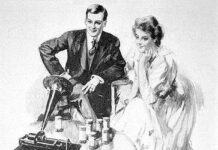
Consider the photophone. Invented in 1880, it was his brainchild. It transmitted sound on beams of light. A precursor to fiber optics, really. Then came the Graphophone in 1886. He didn’t stop at wires and light. He got into sound recording too.
But there’s a darker chapter in this tech timeline. It starts with a bullet.
In July 1881, U.S. President James A. Garfield was shot. The doctors at his bedside were baffled. They couldn’t find the bullet. They kept probing blindly with sterile instruments, making the wound worse. It was a medical disaster in real-time.
Enter Bell.
He teamed up with Simon Newcomb, a professor at the U.S. Nautical Almanac Office. They didn’t have much time to waste. The goal was simple. Build an electrical device to detect the metal projectile inside Garfield’s body. They called it an electrical bullet probe.
The demonstration happened in the autumn of 1881. Bell and Newcomb brought the apparatus to the White House. The results? Mixed at best. The device worked in theory. It picked up the metallic density. But in practice, it struggled. The mattress Garfield was lying on interfered with the signal. The doctors dismissed it. The president died shortly after.
The probe worked in theory but failed in the messy reality of a hospital bed.
Bell didn’t let the failure stick. He moved on. Fast.
By 1907, the focus had shifted entirely. He was looking up. He founded the Aerial Experiment Association. The goal? To crack the code of powered flight. Before the Wright brothers had their famous moment at Kitty Hawk, Bell was already funding and experimenting with aircraft. He wasn’t just building devices for the ground anymore. He was building them for the sky.
It’s easy to forget that the man who connected voices also tried to save lives with electricity and then tried to conquer gravity. The timeline is jagged. The interests are scattered. But the curiosity was constant.