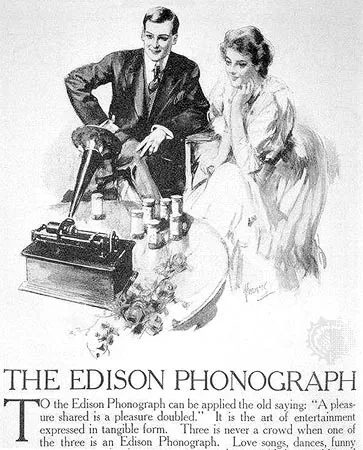
Sound recording is simply the act of capturing air vibrations and stamping them onto something you can keep. When you play it back, the machine does the opposite, turning those physical marks back into sound waves that hit your eardrum. This loop—recording then reproduction—is the foundation of nearly every audio experience you have today.
For decades, this battle for fidelity and durability has been fought across three main fronts: mechanical discs, magnetic tape, and optical digital media. Each method solved different problems for different users. Mechanical systems offered permanence but degraded with every play. Magnetic tape allowed for easy editing and erasing but suffered from noise and physical wear. Digital optics promised pristine, repeatable quality but required complex decoding.
The Phonograph Disc: The Original Mechanical Archive
The phonograph disc remains the archetype of mechanical sound storage. It works by etching a physical groove into a surface. A stylus tracks this groove, translating the microscopic bumps and valleys into mechanical movement, which is then amplified into sound.
This method is inherently analog. The shape of the groove directly mirrors the shape of the sound wave. It is robust. It is tactile. But it is also limited by physics. Every time the needle drops, it wears the record down slightly. The signal-to-noise ratio is capped by the material’s ability to hold a sharp impression without adding its own hiss or pop.
Despite these flaws, the phonograph disc established the standard for mass-media consumption. It turned audio from a live event into a commodity you could buy, sell, and store. It created the album format. It defined the consumer experience for much of the 20th century.
Why Mechanical Recording Still Matters
You might think mechanical systems are obsolete relics. They are not. Vinyl has seen a massive resurgence among audiophiles and collectors who value the ritual of playback and the specific warm distortion that analog gear produces. The “warmth” is often just harmonic distortion added by the needle tracking the groove, but listeners associate it with richness.
The mechanics are simple. No power is needed to spin the platter in some designs. No code is needed to decode the data. It is pure physics. This simplicity is its strength and its weakness. It cannot be copied infinitely without generation loss like digital files. It cannot be easily edited. But it is immutable. Once cut, the master is set.
The Shift to Magnetic Tape
Magnetic tape changed the game by making audio mutable. Instead of cutting a groove, a microphone converts sound into an electrical signal, which is then used to magnetize particles on a plastic strip coated in metal oxide. This allows for recording, erasing, and re-recording.
This flexibility enabled radio broadcasting, multi-track studio production, and portable music players. The Walkman didn’t just play music; it let you curate your soundtrack. But magnetic tape is fragile. It tangles. It degrades. It picks up background hum. And copying it introduces generational noise.
Digital Optics and the Modern Standard
Optical systems, primarily the Compact Disc (CD) and later DVDs, shifted the paradigm again. Instead of physical grooves or magnetic fields, data is stored as microscopic pits and lands on a reflective surface. A laser reads this data, converting it into binary code (zeros and ones) that a computer interprets as sound.
This digital approach

How Vinyl Grooves Actually Capture Sound
It starts with a spiral. A 90-degree V-shaped channel carved into a plastic disc. You spin it at 33 and a third rotations per minute. A stylus—the “needle,” if you want to keep the nostalgia—rides that groove. It doesn’t just slide forward. It vibrates. Back and forth. Parallel to the disc surface, but perpendicular to the groove walls. This motion traces the actual shape of the sound wave.
The top of the stylus holds a tiny magnet. That magnet swings through a small coil. Physics does the rest. Magnetic induction generates an electrical voltage. That voltage is the ghost of the original sound. Frequency comes from how fast the stylus shakes. Loudness comes from how wide the shake is.
Stereo: Creating Depth with Two Walls
Monaural sound is flat. It lacks dimension. Stereo fixes that by mimicking human hearing. Two eyes give depth. Two microphones give presence. The recording captures sound from two different angles. Playback uses two separated speakers.
The groove changes to accommodate this. Instead of one signal, there are two. They oscillate perpendicular to the left and right walls of the V-groove. The inside wall is the left channel. The outside wall is the right. The single-coil monaural pickup is gone. Replaced by two coils. Each one senses motion against its respective wall. The signals merge in an amplifier. Then split again for the speakers. You get space. You get immersion.
Taming Wow, Flutter, and Rumble
Frequency control matters. If the pitch wavers, the ear notices. The threshold is low. Less than 0.1 percent variation. Anything more sounds like a warbling tape deck.
To stop slow pitch drops—wow —and rapid jitter—flutter —the record player needs stability. A heavy turntable helps. It resists changes in speed. A precision motor ensures consistency. But mass alone isn’t enough. Mechanical vibration must be isolated. If the turntable shakes, the stylus feels it. That’s rumble. You want silence when no music is playing.
The stylus itself is precise. It’s not round. It’s elliptical. The long axis sits across the groove. This shape improves compliance. Compliance means tracking ability. The stylus must follow the groove’s twists without skipping. The tip must be tiny. Less than 25 micrometers. That’s 0.025 millimeters. One-thousandth of an inch. Industrial diamond. It has to be hard enough to survive the friction.
The Physics of Induction and the Problem of Noise
Faraday’s law of magnetic induction governs the pickup. The voltage induced in the coil depends on two things. The strength of the moving magnet. And the period of the oscillation. Simple inverse relationship.
This creates a problem. High frequencies oscillate quickly. Low frequencies move slowly. To keep the volume constant across all pitches, you can’t have the same physical amplitude for both. High frequencies need smaller movements. Low frequencies need huge movements. The stylus can’t handle that.
Try to carve a deep groove for a bass note, and the stylus loses track. It can’t follow the excursion. The compliance limits of the system break down. You get distortion. You get lost sound.
There’s another issue. Hiss. The plastic isn’t perfect. It has grain. Microscopic imperfections. As the stylus rides the groove, it hits these grains. High-frequency vibrations result. You hear it as noise. It masks the quietest parts of the music.
Solving the Signal Chain with Pre-emphasis
You can’t fix the plastic’s graininess during playback. You have to prevent it during recording.
The solution is pre-emphasis. Before the signal goes into the cutting head, engineers manipulate it. They attenuate the low frequencies. They boost the high frequencies. The midrange stays linear. Why? Because the low frequencies are reduced, the stylus doesn’t have to move as wildly. It stays in control. The high frequencies are boosted, but that’s okay because the playback system will handle them differently.
When you play the record, you reverse the process. Equalization kicks in. The amplifier cuts the highs. Boosts the lows. The result is a flat, linear response. The hiss is suppressed. The bass is restored. The listener hears what was originally performed. Not what the medium allowed.
It’s a compromise. A careful dance between physics and engineering. The vinyl doesn’t just store sound. It survives it.
How magnetic tape captures sound
The audiotape wasn’t just plastic. It was a magnetic storage medium. A plastic strip coated with ferric oxide or chromium dioxide particles. The recording head is a C-shaped electromagnet. Sound hits a microphone. It becomes an electrical signal. That signal creates a magnetic field in the head’s gap.
As the tape moves, the particles align. They lock in the shape of the wave. Frequency determines how close the magnetic reversals are. Amplitude determines how strong the magnetization gets.
It wasn’t perfect. Magnetic domains have inertia. They resist flipping. This hysteresis distorts the signal. Engineers fixed it with bias. A 100 kilohertz sine wave is added before recording. It linearizes the tape. It kills the distortion.
Then there is the hiss. Random noise from poorly aligned magnetic domains. It lives in the high frequencies. Lower frequencies magnetize better. Higher frequencies don’t. So the hiss dominates the treble.
Dolby noise reduction became the standard fix. It boosts high frequencies before recording. They overpower the hiss. On playback, the treble is cut back down. The hiss stays down too.
Why digital discs changed the game
Compact discs replaced the analog mess. Digital technology avoided the physical limits of tape and vinyl. Phonograph records have limited dynamic range. Tape hiss is always there.
The CD offers over 90 decibels of dynamic range. Ideally. That’s a huge headroom. The frequency response is linear. 20 hertz to 20,000 hertz. It covers the entire human hearing range. No more tape warble. No more surface noise. Just data.
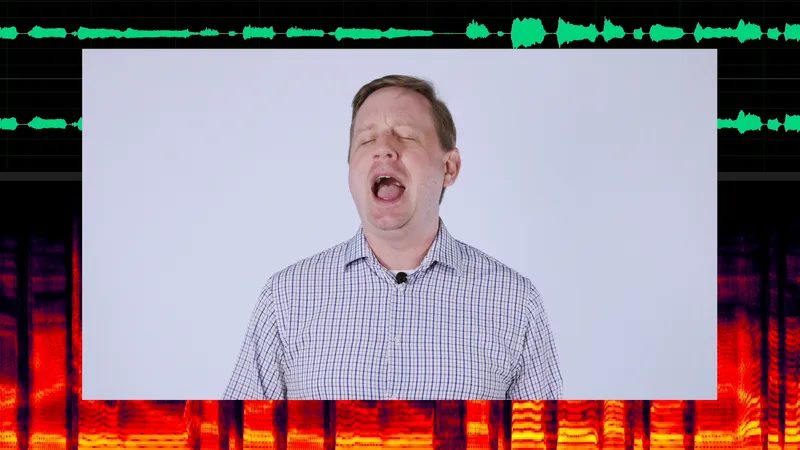
How CD Sampling Captures Human Hearing
Digital audio isn’t magic. It’s math. Specifically, it’s the process of capturing a continuous sound wave by taking snapshots at precise, equal time intervals. These samples approximate the original wave. The goal is to mimic what the human ear hears. Humans can detect frequencies up to 20 kilohertz. To capture that range without losing data, the sampling theorem applies. You need a rate slightly above twice the highest frequency. That’s why compact discs use 44.1 kilohertz. It’s a specific standard. It leaves no room for error.
The signal isn’t just captured. It’s quantized. The amplitude is split into 32,768 distinct levels. This is 2 to the power of 15. With that many steps, both loud and soft sounds are reproduced accurately. The detail is fine enough to catch intensity changes smaller than one decibel. That is barely noticeable to the human ear. Yet, the digital format preserves it across the entire dynamic range.
From Binary Bits to Analog Sound
Each snapshot is converted into binary code. These bits are impressed onto the disc’s surface. Playback reverses the process. The reader head scans the disc. Data moves into a first-in first-out buffer in the computer’s memory. It’s a holding cell. It smooths out the flow of information.
A 44.1-kilohertz internal clock drives the conversion. The buffer releases points one by one. They are transformed back into analog signals. These signals go to a standard power amplifier. Then to the loudspeaker. The timing is exact. The recording’s time scale is reproduced faithfully. This eliminates the frequency drift and instability common in older analog formats. The result is consistency. Every play is identical to the last.