Five months until midterms.
Democrats are scrambling. They are trying to convince voters that cost of living matters more than everything else.
To make the pitch land, some old messaging has to go. Climate change? Once a pillar, it is fading into the background. Matt Huber thinks this is fine. Actually, he thinks it is good.
Huber teaches geography at Syracuse. He wrote Climate Change as Class War. He also wrote a NYT op-ed with a title that basically says: Stop talking about the ice melting.
He told Sean Rameswaram that de-centering the crisis might be the smartest play Democrats have left.
Why stop the talk now?
It marks the end of a two-decade experiment. For twenty years, Democrats bet everything on one idea: Climate would galvanize a mass coalition around green jobs. Huber doesn’t think it will anymore. Centering the “crisis” rhetorically hasn’t built the power or the majority.
Most Americans? They are worried about their wallets, not the weather.
When did it become the issue?
- An Inconvenient Truth. Al Gore changed the zeitgeist. A few years later came the financial crash.
The mood mirrored the Great Depression. People wanted public investment. Jobs. Climate change provided the urgency. It made the argument for massive spending stick. It linked environment to economy.
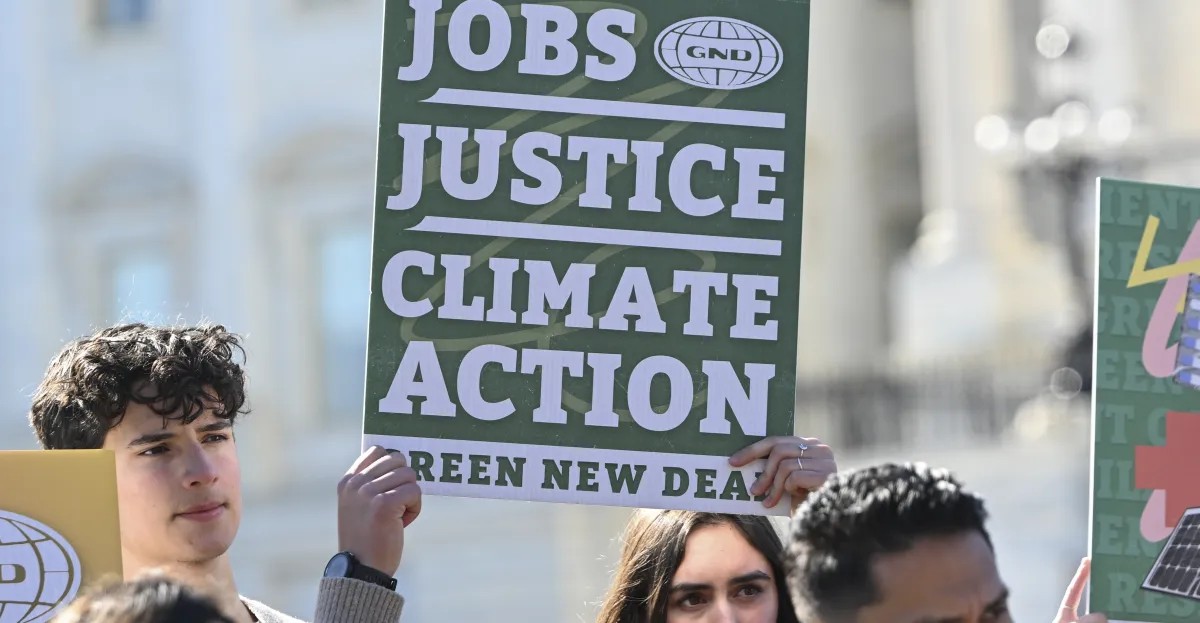
When Alexandria Ocasio-Cortaz pushed the Green New Deal, the logic held. She wanted a New Deal-style response to an economic emergency.
It never came.
We got the Covid recession instead. A strange shutdown, not the kind of industrial collapse that demands a federal jobs program. The “Green New Deal” label got weaponized. Fast. Huber was a stan. He liked the positive vision.
But the execution was messy. The FAQ document from 2019.
It was bizarre stream of consciousness. Saying they wouldn’t ban airplanes or cows.
Fox News seized it. The narrative became “they want to ban burgers.”
What started as a broad, working-class appeal became another culture war trench.
Biden knew he couldn’t use that branding. He called it the Inflation Reduction Act instead.
It was the biggest environmental legislation in US history. Or so they said. Now? No one mentions it.
Huber points out the disconnect. The IRA relied on long-term tax credits for private investment. Communities got the projects but didn’t associate them with Biden. They just saw private firms.
Meanwhile, inflation crushed the working class.
The White House pointed at GDP. Low unemployment. The numbers were great.
People couldn’t eat GDP. They had to pay for groceries.
The answer wasn’t in the climate bills. It was in the kitchen.
2024 came and went. Trump returned. He repealed parts of the act. US emissions went up in 2025.
Depressing. Sure.
But watch the candidates.
Working-class Dems. Union members. They want to tax the rich. They want Medicare-for-All.
But they avoid the C-word.
When they do mention it, they link it to energy bills. To affordability. They realized apocalyptic rhetoric doesn’t move people. Survival does.
Sam Forstag in Montana is a smoke jumper. He parachutes from planes to fight fires. He is a union member. Bernie and AOC endorse him.
His website? Climate change gets a brief mention, if that. It’s tied to energy jobs.
Same in Oklahoma. An iron worker.
Same in Minnesota. A flight attendant.
Five years ago, these were the Green New Deal messengers. Now? They keep it quiet.
Look at Zohran Mamdani.
He used to run on public power. Now he won on affordability. Barely touched climate in his general election push.
The message landed: This is how you build a coalition. This is how you win.
Huber doesn’t cry over this pivot.
“The climate challenge is a question of power.”
It wasn’t breaking his heart. It was proving his thesis.
Energy, transport, housing. These are the sectors that need decarbonizing.
These are also the sectors working-class people care about when their money runs out.
Shouting “existential threat” didn’t build power.
Focusing on the bill for electricity? Maybe that will.
Once the power is built, the decarbonization can follow.