Oprah didn’t just tweet. She opened the floodgates.
When she logged on in April 2009, she didn’t just send a message. She moved social media out of the tech geek’s garage and into the living room. Now? Everyone has a LinkedIn profile. Your grandma has a Facebook page. You check yours obsessively. It’s fun. It’s easy. It’s everywhere.
But there’s a question lurking under the status updates.
Is it dangerous? Can you actually become addicted to connecting?
The Anatomy of a Network
Stop thinking of this as “new.” It’s not.
Social networking has existed as long as humans have. It’s just the structure of relationships. You are part of one massive global web. But you also belong to smaller, tighter circles. Your work network. The dog park crowd. The Tuesday night book club. They overlap. They multiply.
The web sites didn’t invent this. They just mapped it.
Websites like Facebook or MySpace took face-to-face dynamics and put them online. You can see the connections. You see your friends’ friends. You see the graph. It’s powerful because you can manage those relationships digitally.
Some sites target specific groups. LinkedIn? Professionals. Ravelry? Knitters. But the general interest sites let you build smaller worlds within the big one.
Is Internet Addiction a Real Disorder?
Kids are the usual suspects.
A 2007 University of Southern California study found that nearly half of parents thought their kids spent too much time in front of screens. 20.7% thought it was too much time online.
That sounds low. Until you remember that in 2005, a South Korean man died after playing online games for 50 hours straight. No breaks. Authorities actually created “Internet Rescue Schools” to pull kids away from screens and into fresh air.
But it’s not just kids.
In 2008, the American Journal of Psychiatry published an editorial supporting “Internet addiction” as a real mental condition. The medical community pushed back. It’s not a formal diagnosis yet. You won’t get it in the DSM.
Does that mean it isn’t a problem?
No.
Treatment centers worldwide already offer rehab for it. They treat cyberporn. Online gambling. eBay addiction. Online affairs. The common thread? Negative consequences. If your actions are hurting you or others, that’s the hallmark of addiction.
So, is Facebook different from talking on the phone for hours?
Not really. Not if you’re average.
The average American user spends about 15 hours online per month. If you’re reading this, you’re probably one of them. You’re normal.
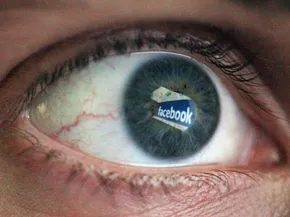
But if you’re spending abnormally large amounts of time there? You’re damaging more than just your eyes.
The Physical Cost of Digital Connection
Experts warn that lack of face-to-face contact hurts you socially and physically.
Relying on a screen for human interaction undermines your ability to read social cues. You miss body language. You miss the subtle shifts. Some researchers believe we’re genetically wired to benefit from being face-to-face. The screen blocks that.
There are online tests to see if your usage is a problem. Don’t take them if you’re already addicted to taking online tests.
Who Is Getting Hooked?
If you’re in a social network, you know the pull. It’s compelling.
Who else is getting caught in the web?
Stay-at-home mothers.
They are the newest group of addicts. Blogs and social networks offer interactivity. Connection. Things that are hard to find when you’re raising an infant.
First-time moms often feel isolated. Going online to share feelings can be therapeutic. Famous “mommy blogger” Heather Armstrong credits her readers for helping her cope with postpartum depression.
But for some, the internet becomes an escape.
Real life takes a backseat. The laptop stays open. The house stays messy. The isolation persists, just in a different form.
When does it stop being a tool and start being a trap?
The line is blurry. And it’s getting thinner.
The Mechanics of Digital Hooking
It is a business model built on repetition. More visitors returning means more ad revenue. More revenue means profit for the platform owner. Programmers do not leave anything to chance. Every pixel on a social networking site serves a single purpose: suck you in and keep you coming back.
How? They weaponize routine.
Sites like Facebook and Twitter introduced “status updates” for a reason. Enter a few short phrases about what you are doing right now. Suddenly you are checking your feed. Checking friends’ feeds. Changing your own status. The loop tightens.
If you comment on a photo, the site sends an email notification. It reaches out to you. You reach back in.
Features like “poking” a friend, taking quizzes, or uploading a picture of a new puppy create a cycle of validation. You get “oohs” and “aahs.” The site keeps you coming back from a few times a day to a few dozen.
Then came the wireless revolution.
BlackBerry. iPhone. Devices capable of moving data at speeds that feel instant. Users gained access to their social networks 24 hours a day. Apps made logging on convenient. Too convenient.
The design taps into a primal human desire: the need to stay connected. Nostalgia hits hard when you reconnect with a grade-school classmate on Facebook. It is heady. It is exciting.
But there is a darker engine driving this addiction.
Why We Can’t Look Away
Plain old narcissism.
We broadcast our personalities every time we post a thought, a photo, a YouTube video, or answer a “25 Things About Me” meme. We put that information out there to provoke a response. To force a connection.
Being part of a social network is like having your own entourage. They follow you everywhere. They comment. They applaud.
It is seductive.
In 2008, researchers at the University of Georgia studied the correlation between narcissism and Facebook users. The results were predictable. The more “friends” and wall posts a user had, the more narcissistic they were.
Narcissistic people use Facebook for self-promotion. Not for genuine connection. The theory suggests social networks bring out the narcissist in all of us.
There is also the voyeurism.
Following exchanges on Twitter or posts on Facebook and MySpace is akin to eavesdropping. It is entertaining. It makes you feel like a “fly on the wall” in someone else’s life.
The Status Game
Social networking sites list your “friends” or “followers” publicly. Instant status.
How many people spend their time trying to get more friends? More followers? More testimonials?
We work hard in real life to elevate our status. To make friends. To find boosters for our self-esteem.
Online social networking provides this instantly. You don’t even have to change out of your sweatpants.
Who Was Dominating in 2009?
According to a January 2009 study by Compete.com, the landscape looked different back then. Here were the top 10 social networks by monthly visitors:
- Facebook : 1,191,373,339 monthly visitors
- MySpace : 810,153,536 monthly visitors
- Twitter : 54,218,731 monthly visitors
- Flixster : 53,389,974 monthly visitors
- LinkedIn : 42,744,438 monthly visitors
- Tagged : 39,630,927 monthly visitors
- Classmates.com : 35,219,210 monthly visitors
- MyYearbook.com : 33,121,821 monthly visitors
- LiveJournal : 25,221,354 monthly visitors
- Imeem.com : 22,993,608 monthly visitors
The hierarchy shifted after this. Facebook pulled ahead. MySpace faded. Twitter changed its character. But the underlying mechanics? Those remain largely the same. You are still there for the status. You are still there for the connection. And the algorithm is always watching.
The Cost of Connection
The digital landscape is shifting. We are moving past the initial excitement of connectivity into a phase of scrutiny. The benefits of social capital are real. College students use these platforms to build networks that translate into job offers and professional relationships. That data from Ellison, Steinfeld, and Lampe confirms it. Social capital isn’t just a buzzword. It’s currency.
But there is a flip side. A heavy one.
BBC News reported that online networking can actively harm health. This isn’t speculation. It’s a documented trend. The line between staying connected and being consumed is thin. In South Korea, the situation was so severe that a man died after a long gaming session. This wasn’t an isolated incident. It pointed to a cultural crisis. Web obsession became a public health concern.
Why We Click
The mechanics of addiction are baked into the design. Facebook’s algorithm rewards engagement. It triggers dopamine hits. Denise Caruso at Salon asked why Facebook is so addictive. The answer lies in the feedback loop. Likes. Comments. Shares. These are digital validations. They feel like human connection.
Elizabeth Cohen at CNN listed five clues of Facebook addiction. Checking profiles out of habit. The inability to disconnect. It mirrors other behavioral addictions. But it’s not just about narcissism. LiveScience suggested that profiles can reflect narcissistic traits. Christine Rosen called it the “new narcissism.” A curated self. A virtual friendship that lacks depth.
So why do we keep going back? Rick Kirschner asked this question too. The need for human connection is primal. The internet provides a shortcut. A faulty one, perhaps. But it is fast.
The Hidden Data Trail
Behind the addiction lies a massive amount of behavioral data. The Center for the Digital Future tracks this. Their 2008 report highlighted shifting trends among adults regarding children going online. Parents are worried. They are watching screen time. The data shows a direct correlation between internet use and reduced TV viewing for those under 18. But is this a good trade?
Mark Glaser provided a guide to social networking. He outlined the risks and rewards. The rewards are visibility. The risks are privacy and psychological dependency. Brian Solis wrote about “cultural voyeurism.” We watch each other. We curate our lives for an audience.
The hyperconnected state, as described by Lev Grossman in Time, changes how we process reality. It fragments attention. It accelerates expectations.
Where Do We Go From Here?
The debate is no longer about adoption. It’s about moderation. Lane, a psychologist, asked if overuse of the internet should become a mental disorder. This is a serious question. If the behavior causes harm, does the diagnosis follow?
Rachel Mosteller noted that even mothers are addicted. The internet is a tool for work, family management, and escapism. It is everywhere. Andy Kazeniac reported on Compete.com’s findings. Facebook took the top spot. Twitter climbed. MySpace was fading. The hierarchy of social networks changes rapidly.
The question remains: How do we use these tools without letting them use us? The data is clear. The benefits exist. The costs are rising.
We are left with a choice. Engage with intention. Or get lost in the feed.