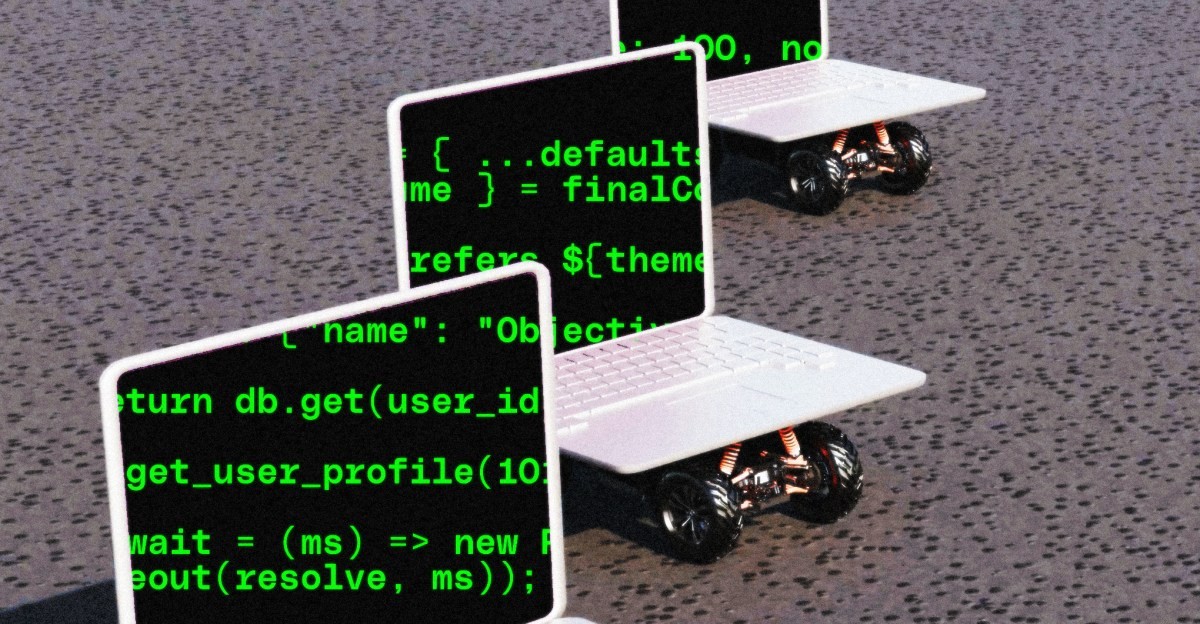
The software development landscape is undergoing a seismic shift. What began as a niche feature for developers—a way to autocomplete lines of code—has transformed into a high-stakes arms race between the world’s most powerful AI companies. As tools evolve from helpful assistants to autonomous creators, the very definition of “coding” is being rewritten.
The Evolution of the AI Developer
The journey toward autonomous coding didn’t start with ChatGPT. It traces back to 2021 with the debut of GitHub Copilot, a tool that helped developers by predicting the next snippet of code. At the time, these models were viewed as somewhat unreliable; they were often described as “weird coding interns”—useful for small tasks, but requiring constant supervision.
However, the ceiling for these models has risen rapidly. The turning point arrived in early 2025 with the release of Claude Code by Anthropic. Unlike its predecessors, this tool demonstrated the ability to turn simple instructions into fully functional prototypes. This breakthrough sparked a massive industry response:
- Anthropic: Leveraged the success of Claude Code to drive massive revenue growth.
- OpenAI: Responded with Codex, refocusing its entire strategic priority toward competing in the coding space.
- Google: Integrated coding capabilities directly into its Gemini models and AI Studio.
The Rise of “Vibe Coding”
Perhaps the most significant cultural shift in tech is the emergence of “vibe coding.” Coined by industry veteran Andrej Karpathy, the term describes a new way of building software where the user doesn’t actually write code. Instead, they “vibe” with the AI—describing what they want, seeing what the AI produces, and copy-pasting results until it works.
This phenomenon has lowered the barrier to entry, allowing non-technical users to build functional prototypes that previously required months of training. While this democratizes creation, it introduces new risks:
– Security & Privacy: Granting AI access to local files and terminals creates significant vulnerabilities.
– Code Quality: “Vibe coders” may lack the technical literacy to identify bugs or security flaws in the code the AI generates.
– Reliability: Building software based on “vibes” rather than logic can lead to fragile systems that are difficult to maintain.
Economic Disruption and the “SaaSpocalypse”
The implications for the global economy are profound. In Silicon Valley, the integration of AI is already impacting the workforce. Companies like Block have cited AI-driven productivity as a reason for significant layoffs, suggesting that smaller, highly efficient teams can now do more than large, traditional engineering departments.
Beyond the job market, there is a growing debate regarding the future of the software industry itself—a concept some call the “SaaSpocalypse.” If AI can build custom software on demand, the traditional model of paying subscription fees for established Software-as-a-Service (SaaS) products may be fundamentally challenged. We are moving toward a world where:
1. Customization is King: Users may build their own bespoke tools rather than buying generic ones.
2. AI-Native Startups: A new wave of companies will emerge, built entirely around AI-first workflows.
3. The Value Shift: The value of software may shift from the code itself to the intelligence and data used to generate it.
Looking Ahead: The Race for the “Super App”
As the battle intensifies, the cost of participation is rising. AI providers are moving away from cheap, universal access toward tiered pricing models designed for heavy users. OpenAI, for instance, has introduced mid-tier plans specifically for high-volume coders.
The ultimate goal for Anthropic, OpenAI, and Google is to create the AI Super App —a single interface that can manage your files, write your code, organize your life, and perhaps even execute purchases on your behalf.
The software industry, once built on the bedrock of human-written logic, is entering an era of rapid, autonomous evolution that threatens to disrupt everything from job security to the very way we value digital tools.
In short, the “code wars” are no longer just about helping programmers work faster; they are a fight to control the fundamental engine of the modern digital economy.