In an era defined by rapid technological shifts, global conflict, and economic instability, many people feel a growing sense of malaise. Recent polling suggests that Americans are increasingly dissatisfied with both their current lives and their future prospects. Amidst this heavy atmosphere, a common cultural trend has emerged: the elevation of cynicism as a sign of intelligence.
However, psychological research suggests that we may be misidentifying wisdom for negativity. To navigate these turbulent times, experts suggest we need to distinguish between two often-confused concepts: optimism and hope.
Optimism vs. Hope: Understanding the Difference
While the terms are often used interchangeably, Jamil Zaki, a psychology professor and director of the Stanford Social Neuroscience Lab, argues they serve very different functions.
- Optimism is the belief that the future will turn out well. While optimism can lead to happiness and health, it carries a risk of complacency. If you believe things will naturally improve, you may feel less urgency to act.
- Hope is more complex. It is the recognition that while the future is uncertain and the present is difficult, there is a possibility for improvement—and, crucially, that we have the agency to make it happen.
“Hope is a stubborn, active sense of the world. It’s an acknowledgement that things are not what we want now, but a sense that they could improve and that we have something to do about it.”
The Myth of the “Smart Cynic”
There is a pervasive social stereotype that being cynical makes a person more perceptive or “street smart.” Research indicates that:
– 70% of people believe cynical individuals are more intelligent than non-cynics.
– 85% of people believe cynics are better at detecting lies and social deception.
The reality contradicts this. Data shows that cynical people are not any smarter than their non-cynical counterparts; in fact, they are actually worse at accurately identifying who is lying.
Furthermore, widespread hopelessness serves a political purpose. Cynicism and despair can lead to social paralysis, making people less likely to vote or participate in movements. This “freezing” effect is often a goal of authoritarian propaganda, as a hopeless population is much easier to control.
The Anatomy of Hope: Waypower and Community
If hope is not just a feeling, but a capacity, what does it actually consist of? According to Zaki, hopeful individuals—often seen in the profiles of great activists—possess three key traits:
- Vision: The ability to envision a better future.
- Grit: The passion and persistence to pursue a goal despite obstacles.
- Waypower: The ability to map a practical path from the current reality to the desired future.
Crucially, “waypower” is rarely a solo endeavor. Hope is often cultivated within communities. By finding others who desire the same changes, individuals transform personal hope into collective action.
Is Hope Genetic or Learned?
A common question is whether we are born with these outlooks. Twin studies suggest that while there is a small genetic component—roughly 25% —the vast majority of our outlook is shaped by experience.
While early childhood environments play a significant role, hope is not a “life sentence.” It can be cultivated through:
– Therapy: Which helps reshape how individuals perceive the world.
– The Practice of Noticing: Moving away from the “digital gloom” of screens and paying attention to local, real-world connections.
– Hobbies: Engaging in activities (like film photography or local clubs) that force a person to observe beauty and connect with neighbors.
Conclusion
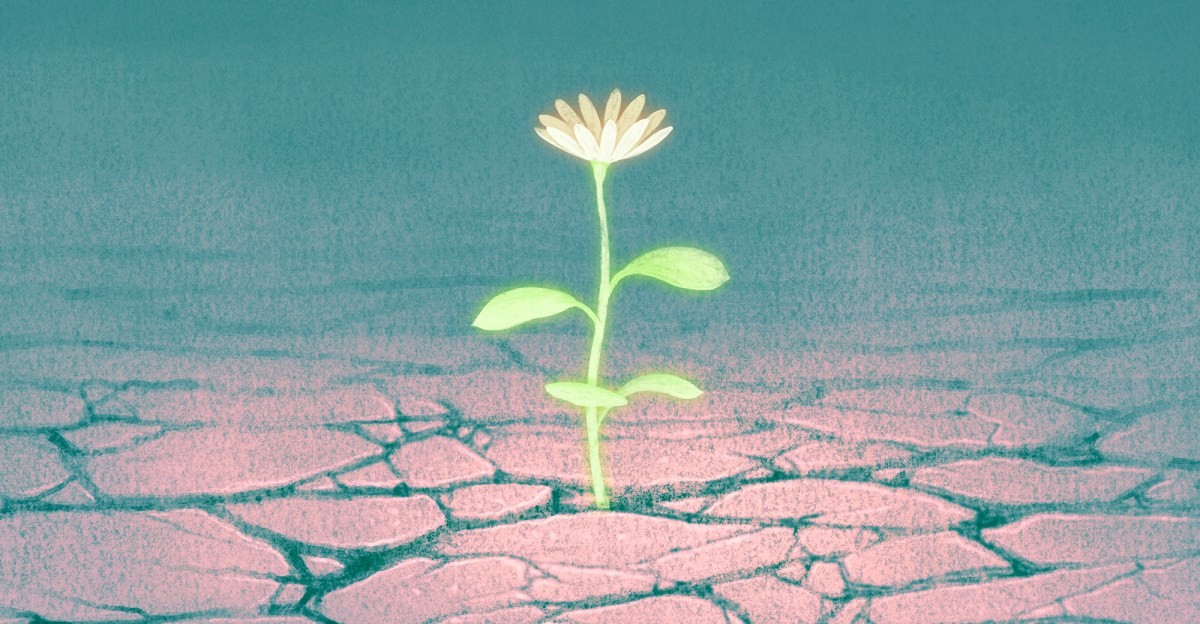
While cynicism is often mistaken for wisdom, it frequently leads to inaction and social fragmentation. True hope is not about ignoring the darkness, but about acknowledging it while actively working to build a path toward the light.