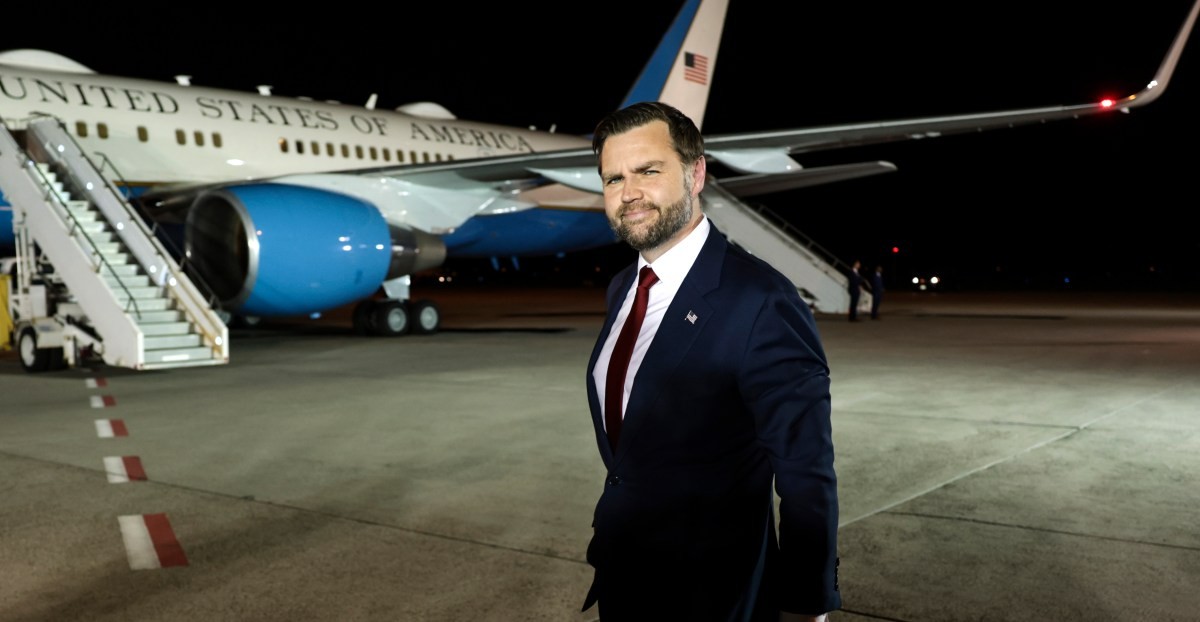
Vice President JD Vance recently experienced a series of significant diplomatic setbacks that have raised urgent questions about his ability to shape a distinct foreign policy. Following a failed attempt to support Hungarian Prime Minister Viktor Orbán and a collapsed negotiation process with Iran—compounded by President Trump’s announcement of a new blockade on the Strait of Hormuz—it appears that Vance’s specific geopolitical vision is being systematically dismantled by the very administration he serves.
The Postliberal Vision: A Different Kind of Right-Wing Politics
To understand why these failures matter, one must understand the ideology Vance represents: postliberalism. Unlike traditional conservatives, postliberals like Vance view the primary threat to society as modern liberalism itself—specifically its focus on individual rights and market-driven social progress.
Vance’s foreign policy was designed to be a tool for this ideological project. His goals were twofold:
1. Empowering Europe’s Far-Right: Rather than traditional diplomacy, Vance sought to act as a patron for European nationalist parties, viewing them as allies in a struggle to restore “civilizational self-confidence” to the continent.
2. Reducing Military Adventurism: He aimed to pivot the U.S. away from Middle Eastern conflicts, focusing instead on internal spiritual and moral renewal through a more restrained, nationalist approach.
Vance viewed Viktor Orbán’s Hungary as a blueprint for this new order—a state where the government actively shapes the moral character of its citizens through religious and social traditionalism.
The Trump Factor: Instinct Over Ideology
The fundamental friction lies in the fact that while both Trump and Vance are right-wing nationalists, their methods are fundamentally at odds.
Postliberalism is driven by a structured, albeit radical, intellectual framework. Trumpism, by contrast, is driven by personal impulse and unpredictable instincts. This distinction has led to a direct collision in two critical theaters:
1. The European Fracture
Vance’s attempt to build a “nationalist international” in Europe is being undermined by Trump’s unpredictable actions. Policies such as aggressive tariffs and the controversial proposal to annex Greenland have turned Trump into a “toxic” figure for many European populists. Leaders from France’s National Rally to Germany’s AfD, whom Vance has championed, are increasingly forced to distance themselves from Washington to protect their own national interests.
2. The Middle East Escalation
While Vance has attempted to project an image of a “dove” seeking stability, Trump’s foreign policy has trended toward high-intensity conflict. From bombing Iranian nuclear sites to recent maritime blockades, the administration’s hawkishness directly contradicts the postliberal goal of withdrawing from Middle Eastern entanglements.
The Vice President’s Dilemma
This creates a profound political trap for Vance. As a Senator, he could have criticized the administration from the sidelines. As Vice President, however, he is inextricably linked to these outcomes.
Because he was the primary architect of the outreach to the European far-right and the lead negotiator for Iranian diplomacy, the failures of these missions are viewed as his own. He is currently caught in a cycle where:
– His diplomatic efforts result in unpopular or failed outcomes.
– His boss’s actions alienate the very allies Vance needs to realize his vision.
– He is forced to defend a record that contradicts his own stated principles.
“The Trump administration is currently toxic for most far-right parties in Europe,” notes Cas Mudde, an expert on the European right.
Conclusion
JD Vance attempted to use the MAGA movement as a vehicle for a specific postliberal ideology, but he has found that the vehicle is driven by Donald Trump’s unpredictable impulses rather than a cohesive political program. As a result, Vance faces the difficult task of navigating a political identity that is being actively erased by the administration he serves.