


Look at the wrists of James Bond, Paul Newman, and Idris Elba. They aren’t just wearing any timepiece. They are wearing symbols. Elba showed up to 2021 London Fashion Week with a Black Venom-modified Rolex Datejust II. It was all black. Stealthy. Aggressive. But even that customized beast pales in comparison to the auction prices that have turned these mechanical objects into hard assets.
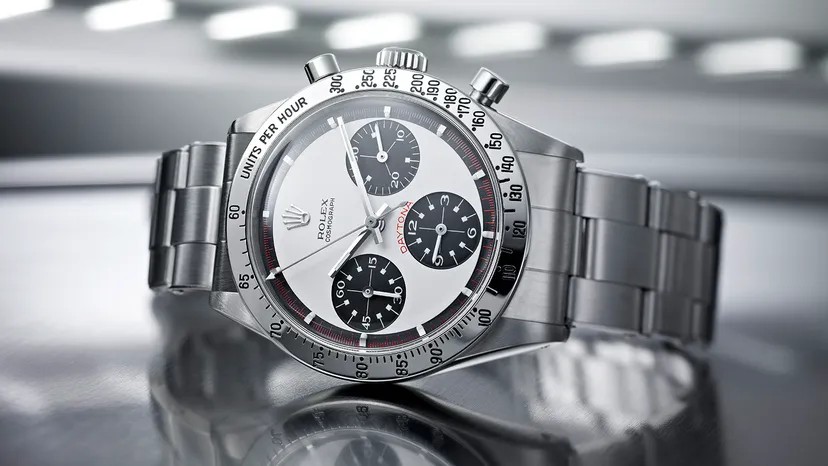
At a Sotheby’s auction in August 2019, standard Rolexes fetched $27,500. That is a lot of money for a watch. It is a lot until you remember the 1968 Rolex Daytona once worn by Paul Newman. That specific dial sold in 2017 for $15.5 million. It was a one-off. It had history. But the hammer price wasn’t just about the man who wore it. It was proof that Rolex has become the undisputed king of exclusive horology.
From London Distributor to Global Icon
The brand didn’t start as a manufacturer. It began in 1905 as Wilsdorf & Davis, a distribution firm in London. Hans Wilsdorf, a German watchmaker, ran it. He had a specific vision. He wanted to build a wristwatch accurate enough to compete with pocket watches. At the time, the idea of wearing a watch on the wrist was laughable to many gentlemen. George Gordon wrote in “Rolex 1905-1989” that men would rather wear a skirt than a wristwatch.
Wilsdorf saw the skepticism as an opportunity. He thought wristwatches were inferior in accuracy and durability. He set out to prove them wrong. By 1908, he had chosen the name Rolex. In 1910, the brand achieved something unprecedented. The Rolex movement became the first to receive the Swiss Certificate of Chronometric Precision from the Official Watch Rating Centre in Bienne. It was the first stamp of approval that said this mechanical device could keep time as well as the larger, more respected pocket watches.
Marketing Genius and Uncompromising Quality
Wilsdorf wasn’t just an engineer. He was a marketer. He understood that people buy stories, not just gears. He pioneered the use of testimonials, leveraging real people to validate the brand’s claims. This strategy drove early promotion and laid the groundwork for the brand’s longevity.
“Hans was a marketing genius,” says Larry Mendel, a senior evaluator at Bob’s Watches in Newport Beach, California. “He was literally decades ahead of his time.”
Wilsdorf positioned Rolex as the best of the best. He didn’t just say it. He backed it up. Quality was always priority number one. From the very beginning, the mechanical integrity of the watches matched the prestige of the logo. This combination of technical precision and aggressive branding is why the brand remains so dominant. It isn’t just about telling time. It is about signaling that you have arrived.
The Oyster and the Power of Publicity
Hans Wilsdorf didn’t just want to make watches. He wanted to make the wristwatch perfect. By 1920, after splitting from Alfred Davis and rebranding as Montres Rolex S.A. in Geneva, his obsession had a specific target: waterproofing. It seemed like a niche feature then. Now, it’s a baseline expectation for any serious timepiece.
But how do you prove a feature people couldn’t see? You create a spectacle.
Wilsdorf understood public relations long before the term was standard business jargon. He needed a proof point that was impossible to ignore. Enter Mercedes Gleitze. In 1927, she swam the English Channel. Wilsdorf rigged the deal, placing a prototype Rolex Oyster on her wrist.
The stakes were high. Ten hours in freezing, churning water should have ruined any mechanical movement. When Gleitze emerged, exhausted but victorious, she pulled off the watch. The rotor spun. The hands ticked. It was in perfect working order.
Wilsdorf didn’t whisper about it. He bought a full-page ad on the front of the Daily Mail. The headline screamed the proof.
This wasn’t just marketing. It was brand strategy in its rawest form. Wilsdorf realized early that celebrity endorsements—specifically athletes in extreme conditions—could transfer qualities of endurance and precision to the product. Rolex has leaned into this playbook for a century. It’s why you see tennis champions and sailors wearing their watches, not just executives in boardrooms.
Why the Bracelet Matters
Innovation isn’t always about the movement inside the case. Sometimes it’s about what holds it to your skin.
Eric Wind, a vintage watch dealer based in West Palm Beach, notes that Rolex’s shift toward integrated metal bracelets was a quiet revolution. By the late 1930s, they introduced the Oyster and Jubilee bracelets. These replaced leather and crocodile straps, which were the status symbols of the era.
Why does this matter today? Look at the shift in global fashion. Casual wear has overtaken formalwear. Leather rots. It smells. It degrades. Metal endures.
Wilsdorf’s foresight in prioritizing durable, self-winding movements and robust metal bands anticipated a world where watches were tools for living, not just accessories for dressing up. The self-winding mechanism meant the watch never stopped unless you did. The metal bracelet meant it survived the sweat, the rain, and the daily grind.
This combination—waterproof case, self-winding movement, durable bracelet—created a template. Most modern sports watches still follow this exact formula. Rolex didn’t just sell a watch. They sold a lifestyle that could handle anything.
And they made sure everyone knew it.
Why Rolex Dominates Despite Not Being the Best or Cheapest
Rolex is often dismissed as a status symbol for the masses, but its market position is anything but ordinary. While ownership signals wealth, it doesn’t necessarily signal the pinnacle of horological expense. During a Sotheby’s auction in August 2019, the most expensive Rolex sold for just $27,500. In the same event, a Patek Philippe commanded $68,750. Yet, Rolex remains the undisputed king.
“[Rolex is a] luxury watch for the common man,” says Mendel. That label is reductive. The brand’s dominance comes from a “perfect storm” of marketing, a crown logo, and consistent quality. It creates a mindset where the owner feels they have secured something enduring.
Does a Rolex keep better time than a $15 Target watch? No. A quartz movement or a smartphone is likely more accurate. But accuracy isn’t the product. The value lies in longevity. “Will it last longer? Absolutely,” Mendel notes.
Paul Altieri, founder of Bob’s Watches, argues that Rolex offers “affordable luxury” relative to high-end competitors. It represents Swiss engineering at its peak. More importantly, it holds value. A Target watch or an iPhone depreciates rapidly. A Rolex can hold its worth for decades, acting as a tangible asset.
Supply Constraints Driving Secondary Market Prices
The economics of Rolex are driven by artificial scarcity. The company produces fewer than 1 million watches annually worldwide. Demand has surged, but supply remains flat. This imbalance puts upward pressure on prices.
For many models, this means a two- or three-year waiting list at authorized dealers. Sometimes, the wait is even longer. This scarcity fuels a robust secondary market where buying and selling become part of the ownership experience. You aren’t just buying a timepiece; you are buying into a system where liquidity is high and depreciation is minimal.
The Price of Celebrity: Why Rolex Watches Cost Millions
The allure of Rolex isn’t just about the metal; it’s about the myth. Ian Fleming knew this. He wore an Explorer, and his creation, James Bond, became the brand’s most potent endorsement. The connection is tangible. A vintage Rolex Submariner reference 6538, worn by Sean Connery in the early Bond films, fetched $60,000 at Worthy in 2016. That was a steal compared to its fate at Sotheby’s auction in August. Valued between $180,000 and $280,000, that same watch didn’t even sell.
Cachet drives price. When a celebrity wears it, the value skyrockets.
Take the Paul Newman Daytona. This isn’t just a watch; it’s a cultural artifact. The actor wore it while racing cars, lending the model a rugged, high-stakes aesthetic that few other timepieces can claim. Only a few thousand were ever made. When one appeared at a Phillips auction in New York in 2017, the bidding war shattered records. The final hammer price was $15.5 million. Add the buyer’s premium, and the total hit $17.8 million. It remains the most expensive wristwatch ever sold at auction.
“I think we were all shocked,” Altieri said. “There’s only one Paul Newman Paul Newman.”
The opening bid started at $10 million. The seller, James Cox, received the watch as a gift from Newman. He donated part of the proceeds to the Nell Newman Foundation. The market reacted with stunned silence. Other watches have gone for more, sure. A Patek Philippe Supercomplication pocket watch sold for over $24 million at Sotheby’s in Geneva in 2014. The Chopard 201 Carat, studded with 800 diamonds, brought in $25 million. The Graff Diamond Hallucination is priced at a staggering $55 million.
But there’s a difference. Those are jewelry. Rolex is a tool.
“They are very durable,” Mendel notes. Rolex didn’t design these watches for a velvet display case. Wilsdorf built them for active life. Diving. Racing. Travel. Endurance. You wear a Rolex. You don’t just look at it.
Whether you buy it for the history, the style, or the specs, the brand keeps moving. Innovation doesn’t stop. Neither does the desire to own a piece of it.
The New Batman and the Magnetic Milgauss
Mendel is vocal about the updated “Batman” GMT. Now sitting on a Jubilee bracelet, he calls it one of the hottest new watches Rolex has dropped in two decades. It’s a specific shift in design language that matters to collectors. But Mendel’s personal pick? The Milgauss.
This isn’t just a pretty face. The Milgauss is built to withstand magnetic fields up to 1,000 gauss. Gauss measures field strength. High gauss means high protection. Rolex designed this for scientists working in labs where magnets are everywhere. It’s functional first. Style second.
Why the Pepsi Bezel Costs More Than Retail
Wind points to the “Pepsi” GMT-Master II as the current king. The name comes from its blue and red 24-hour rotatable bezel. It’s a direct nod to the 1950s version. Before that, the bezel was black and red. That earlier model earned the nickname “Coke.”
The new Pepsi retails for $9,200. Good luck getting one at that price. Wait lists are long. Supply is tight. In some cases, the watch immediately trades for more than retail. The market decides the real value. You just wait for your turn.
How to Buy Pre-Owned Without Getting Scammed
You don’t have to spend years on a waitlist. You don’t need to liquidate assets. Pre-owned Rolexes from reputable dealers offer a way in. These watches are inspected. Restored. Polished.
Prices start around $2,000 to $3,000. For a smaller option, you might find a lady’s cocktail watch for about $1,000. It’s a practical entry point. No drama. No waiting.
Value Holds Up Over Time
Beyond the cool factor, there’s a financial angle. Rolex watches tend to increase in value as time passes. You’re not just buying a tool. You’re buying an asset that appreciates.
Before his death, Wilsdorf created the Hans Wilsdorf Foundation, which owns all Rolex companies and is recognized as a charitable trust in Switzerland. That means Rolex is basically a nonprofit.
The structure is unique. The foundation owns the brand. It’s registered as a charitable trust in Switzerland. Profit goes back into the foundation’s goals. Not into shareholders’ pockets. It’s a business model that operates more like a mission than a standard corporation.


