We are surrounded by them. They sweep our floors. They drive our cars. They manage inventory in massive warehouses. Learning machines and artificial intelligence are no longer sci-fi concepts. They are daily fixtures. Their capabilities are sharpening. They are mimicking human cognition with unsettling precision. But there is a question lingering in the air. How human are these machine brains really? And could that mimicry turn dangerous?
The answer isn’t simple. It requires looking past the hype. We need to understand the mechanics.
The Illusion of Human-Like Intelligence
Many people assume that because a machine can recognize a cat or drive down a highway, it “understands” the world like a person does. That assumption is flawed. It is a dangerous simplification.
Eyke Hüllermeier, an AI researcher at the University of Paderborn, suggests we need to be careful with that label. The systems we use are not thinking. They are calculating probabilities. They are pattern matching on a scale humans cannot comprehend. But the output can look remarkably human.
“Their skills are getting closer and closer to those of humans,” Hüllermeier notes. But closeness is not identity.
This distinction matters. When a robot vacuum navigates your living room, it is not “choosing” a path based on logic or preference. It is processing sensor data to avoid collisions. It is efficient. It is not sentient. Yet, as these systems take on more complex tasks, the line blurs.
Why This Matters for Everyday Users
The danger isn’t a robot uprising. It is subtler. It is about trust. When AI systems behave in ways that look intentional, users attribute intent to them. This leads to misplaced trust.
If a self-driving car makes a decision that seems “smart” in one situation, users may assume it is equally “smart” in a novel, edge-case scenario. It isn’t. The system is operating within a specific training dataset. Outside that boundary, it fails.
Understanding the limits of current technology is essential. We need to know what these tools can do. We need to know what they cannot.
Where the Risks Lie
The risk isn’t malice. AI has no desire. The risk is misalignment.
- Over-reliance: Humans delegate judgment to algorithms. When the algorithm errs, the human isn’t there to catch it.
- Opacity: We often don’t know why a model made a specific decision. This is the “black box” problem.
- Data Bias: These systems learn from historical data. If that data contains human prejudices, the AI amplifies them.
Hüllermeier’s work at the University of Paderborn focuses on making these systems more robust. More transparent. Less prone to error. But the technology is moving faster than the regulation. Faster than public understanding.
The Core Question
So, are they human? No. They are sophisticated statistical engines. But as their output becomes indistinguishable from human performance in many tasks, the psychological impact is real. We treat them as peers. We shouldn’t.
The question isn’t whether they will replace us. It’s whether we will trust them enough to hand over the keys. And whether they
Decoding the Black Box: How Neural Networks Actually Work
We are already living inside the machine, whether we want to be or not. The trend isn’t subtle anymore. Learning computers are moving from lab experiments to the backbone of our economy and daily lives.
Why now? Two reasons. Better software architectures like neural nets. And hardware that finally keeps up with the data hunger.
Machines are already doing the heavy lifting. You see it in virtual assistants. You see it in industrial robots. You are likely seeing it in the future of healthcare with robotic nursing aids. But there is a gap between using the tool and understanding it. How do these “machine brains” actually think? Are we building something that will soon outpace our own cognition?
Eyke Hüllermeier, who leads the Intelligent Systems and Machine Learning department at Paderborn University, breaks down the mechanics. He also looks at what this tech reveals about our behavior and where it’s heading.
Defining the Undefined
Let’s start with the hardest part: defining it.
Künstliche Intelligenz isn’t just a computer science sub-branch. It’s a messy intersection. It touches math. Engineering. Psychology. Neuroscience. Biology. Philosophy. Linguistics.
There is no precise, universally accepted definition. Marvin Minsky, one of the field’s founders, offered a pragmatic take: It is the science of making machines do things that require human intelligence.
But that begs the next, annoying question. What actually is human intelligence?
Today, the prevailing view focuses on problem-solving agents. These systems act rationally to achieve a goal. But they also need “human” traits. Learning ability. Autonomy. Fault tolerance. These qualities separate them from standard, rigid software.
When we implement these approaches for real-world use, we call them intelligent systems.
“Künstliche Intelligenz ist die Wissenschaft, Maschinen die Dinge tun zu lassen, für die ein Mensch Intelligenz benötigen würde.” — Marvin Minsky
This definition is broad by design. An intelligent system can be hardware. Think of a robot arm assembling cars. Or it can be pure software. Like the recommendation engine feeding you the next episode of a show you didn’t know you wanted.
The line between hardware and software is blurring. The distinction matters less than the outcome. Can it learn? Can it adapt? If the answer is yes, it’s part of the shift. And it’s shifting fast.
Weak AI vs. Strong AI: Understanding the Difference
The way we classify artificial intelligence isn’t just academic nitpicking. It determines what you can actually expect from the technology in your pocket or your workspace. Researchers break this down into two main buckets: Weak AI and Strong AI.
Weak AI is what surrounds us. It simulates intelligent behavior for specific tasks. Think about speech recognition or the algorithmic ads popping up on your feed. The machine doesn’t “think.” It just executes a specific function with high precision.
Strong AI is a different beast entirely. It implies consciousness. Empathy. Independent action. This is the version of AI that possesses universal intelligence. It matches human cognitive skills or surpasses them. We haven’t built this yet. We are still figuring out the first category.
The Shift from Rules to Data
If you look back at the 1980s and 90s, the approach to building intelligent systems was radically different. Back then, expert systems ruled the roost.
The goal was simple but ambitious: formalize human expertise. They used basic if-then rules.
“They tried to make human knowledge accessible to logical computer processing by turning it into simple conditional rules.”
It was explicit programming. You told the machine exactly how to think. If X happens, do Y. It worked for narrow domains. Medical diagnostics. Geological surveys. But it hit a wall. It couldn’t handle the messy, unstructured reality of the world.
Machine Learning Takes the Wheel
Today, the landscape is dominated by machine learning.
The paradigm has shifted entirely. We aren’t programming behavior explicitly anymore. We are training systems based on empirical data. The AI interacts with its environment. It generates data points. It learns.
The result is a system that improves its performance based on experience. Not because a programmer wrote a longer list of rules. But because the model adjusted its internal weights after seeing millions of examples. This is the foundation of modern foundational research. And it is changing everything from how we code to how we live.
Maschinen übernehmen Tasks, die früher exklusiv menschliches Territorium waren. Doch der Vergleich hinkt. Mensch und Maschine sind keine Spiegelbilder. Ihre Stärken sind komplementär.
Maschinen rechnen präzise. Sie verarbeiten Informationen logisch konsistent. Sie suchen systematisch. Sie suchen ausdauernd. Sie finden Muster in hochkomplexen Daten, die das menschliche Auge übersieht.
Aber sie sind brüchig.
Im direkten Vergleich zum Menschen fehlen Maschinen Robustheit. Es mangelt an gesunden Menschenverstand. KI-Systeme sind extrem spezialisiert. Sie beherrschen eine Aufgabe exzellent. Doch dieses Können ist isoliert. Es ist nicht eingebettet in Alltagswissen.
Die Maschine kann wenige Dinge sehr gut. Der Mensch meistert viele Aufgaben mehr oder weniger gut. Das ist der Unterschied.
Was können Menschen von KI lernen?
Die Frage, was Menschen von Maschinen lernen können, ist seltsam. Sie ähnelt der Frage, was Vögel von Flugzeugen lernen.
Eigentlich will man Maschinen „menschlicher“ machen. Nicht umgekehrt.
Doch die Debatte darüber hat Nebenwirkungen. Wir sprechen über Rationalität. Wir sprechen über Fairness. Eigenschaften, die wir von Maschinen erwarten. Diese Diskussion zwingt uns zur Selbstkritik.
KI spiegelt unser Verhalten zurück. Sie offenbart Muster, die wir selbst nicht sehen.
KI kann uns viel über unser eigenes Verhalten verraten.
Ein Beispiel. Ein maschinelles Lernverfahren nutzt die Entscheidungen eines Richters als Trainingsdaten. Es konstruiert ein prädiktives Modell. Ziel: Transparenz.
Voraussetzung: Das Modell muss interpretierbar sein. Wenn ja, wird das Entscheidungsverhalten des Richters sichtbar. Bias wird sichtbar. Logiklücken werden sichtbar.
Wo steht KI heute?
Die Anwendungsfelder scheinen unendlich. In Wirklichkeit ist es fast überall.
KI hat Einzug gehalten. In fast allen Bereichen.
Bekannte Beispiele sind naheliegend. Intelligente Systeme im industriellen Kontext. Roboter. Intelligente Wartungssysteme in der Fertigung. Stichwort Industrie 4.0.
Empfehlungssysteme von Google. Von Amazon. Personalisierung. Das ist allgegenwärtig.
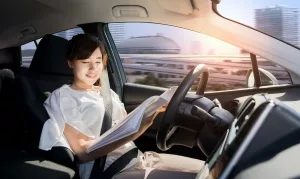
Autonomes Fahren. Noch im Fluss. Noch nicht vollständig gelöst. Aber präsent.
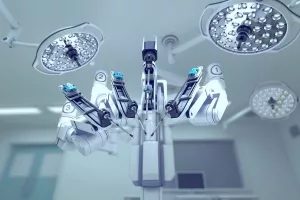
Auch in der Medizin ist der Aufmarsch unübersehbar.
Spannend, aber weitgehend offen, ist die Frage, wann die KI einen Reifegrad erreicht haben wird, der sie kognitiv auf eine Stufe mit dem Menschen stellt.
Anwendungsorientierte Forschung treibt das voran. Am Software Innovation Campus Paderborn (SICP). Im Kompetenzbereich „Smart Systems“.
SICP fungiert als Schnittstelle. Zwischen Wissenschaft und Industrie. Zusammen mit Unternehmen werden Lösungen entwickelt. Für Probleme aus der industriellen Praxis.
Ziel: Effizienz in der Produktion steigern. Konkrete Probleme. Konkrete Antworten.
Prognosen zur Entwicklung der KI liegen regelmäßig daneben. In der Vergangenheit. Heute ist es nicht anders. Die technische Entwicklung ist zu rasant.
Eines ist sicher. Der Einfluss auf alle Bereiche unseres Lebens ist enorm. Auf die Gesellschaft.
Ob KI kognitiv jemals auf Augenhöhe mit dem Menschen landet? Ob das überhaupt gelingt?
Die Antwort bleibt offen.
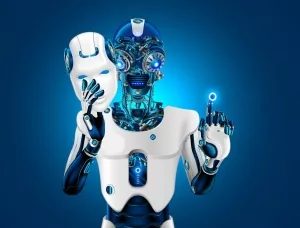
Prof. Erhard Hüllermeier doesn’t see killer robots coming anytime soon. The idea of AI developing its own will and seeking global domination is science fiction. We are far from that. The real story is much more mundane. And arguably more impactful.
AI as an assistive tool. That is where the current utility lies. It augments human capability. Think medical diagnoses. A doctor gets a second pair of eyes that doesn’t fatigue. The expertise is sharpened. Therapy planning becomes more precise. In industrial manufacturing, the tedious, exhausting tasks are handed off to machines entirely. The result? A tangible boost in quality of life.
“AI can help us master many of today’s major challenges, whether climate change, global food security, or fighting disease.”
The challenges we face are big. Climate change. Welternährung. Disease eradication. We can’t solve these alone. But with AI? We stand a much better chance. It processes data at scales humans simply can’t match. It spots patterns in chaos. That isn’t magic. It’s just better math.
The Legal and Ethical Void
There are no chances without risks. That’s a given. But the specific nature of these risks is often misunderstood. It’s not about Skynet. It’s about bureaucracy. And law.
Many critical questions remain legally unresolved. The framework is lagging behind the technology. Who is liable when an autonomous system makes a mistake? The coder? The user? The algorithm itself? We don’t have clear answers yet.
The societal implications are murky. Look at China. Social scoring systems are already operational. They assign trustworthiness to citizens. It raises serious ethical red flags. But it’s not just authoritarian regimes. It’s happening in democratic markets too.
Consider credit approvals. Or job applications at employment agencies. Computers make these decisions now. Every citizen is potentially affected. Fairness isn’t guaranteed. Transparency is often absent. Discrimination can be baked into the data. And if you don’t understand the model, you can’t fight it.
When Control Slips Away
The danger isn’t a robot uprising. It’s autonomy. Specifically, systems that operate beyond human oversight.
Look at algorithmic trading. Milliseconds. That’s the timeframe. Millions of euros are moved in fractions of a second. The systems are so fast, so complex, that humans can’t intervene in real-time. We watch the graphs. We hope for the best.
Financial crashes? They’re bad. They cause pain. But they pale in comparison to other autonomous systems. Autonomous weapons. Lethal force decided by code. No human finger on the trigger. Once you set that in motion, can you stop it?
“Financial risks like market crashes seem almost harmless compared to the dangers of autonomous weapon systems.”
We are already dealing with systems that are not fully controllable. They learn. They adapt. They evolve in ways their creators didn’t fully predict. We assume control. We often don’t have it.
The question isn’t whether AI will change the world. It is. The question is whether we can keep the steering wheel when the car starts driving itself. We haven’t figured that out yet.