The line between sci-fi and reality is thinner than you think. The Matrix isn’t just a movie anymore. It’s becoming your morning routine. Hardware engineers and software developers are refining augmented reality (AR) faster than most people realize. But what exactly is happening when your screen merges with the street outside?
Augmented reality is a subset of mixed reality. It takes interactive digital elements and drops them into your actual environment. You get visual overlays. Haptic feedback buzzes in your hand. Sensory projections change how you perceive space.
“Augmented reality is a form of mixed reality that blends of interactive digital elements – like dazzling visual overlays, buzzy haptic feedback, or other sensory projections – into our real-world environments.”
If you played Pokemon Go, you already know the basic mechanic. The app let users view the world through their smartphone cameras. It projected game items as overlays. Onscreen icons. Score counters. And those elusive Pokemon creatures. They appeared as if they were standing in your backyard. The design was so immersive that it sent millions of people wandering through their neighborhoods. Kids and adults alike stumbled over roots and curbs chasing virtual prizes.
Google SkyMap takes a different approach. You point your smartphone or tablet at the sky. The app overlays information about constellations and planets. It turns a boring night walk into an astronomy lesson.
Wikitude works similarly for landmarks. Point your camera at a building or object. The app pulls up relevant data instantly.
IKEA Place solves a different problem. It helps you visualize new furniture before buying. The app creates an overlay of a couch in your living room. You can see if it fits. You can see if it looks right. No guesswork required.
These consumer apps are just the tip of the iceberg.
The technology extends far beyond smartphones. It’s used in serious fields now. Medicine. Warfare. Business.
The U.S. Army uses AR devices for training. They create digitally enhanced missions for soldiers. The program is officially called the Synthetic Training Environment (STE). It’s so prevalent that the army has standardized the terminology.
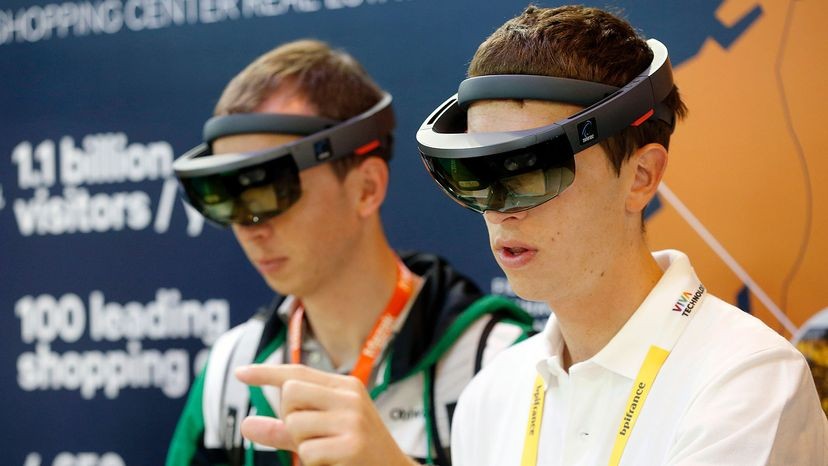
Wearable AR glasses and headsets are coming. They may help futuristic armies process digital information at incredible speeds. Commanders will make better battlefield decisions on the fly.
Businesses are also getting in on the action. Gatwick airport uses an AR app. It helps travelers navigate the chaos of a packed terminal. Wayfinding becomes easier. Stress levels drop.
The possibilities for augmented reality solutions are limitless. The real question is integration. How smoothly will developers weave these capabilities into our daily devices?
It’s not a matter of if. It’s a matter of when. And how well.
The concept behind augmented reality is deceptively simple. You take the real world as it is. Then you layer graphics, audio, and sensory data on top of it. Real-time overlay. It sounds like basic video editing.
Think about the first-down line on a televised NFL game. Or the fancy graphics in a racing broadcast. These are AR. Sort of. But they are limited. They serve a single point of view. The camera sees one thing. You see the same thing. There is no personalization.
Next-gen AR fixes this. It renders graphics specifically for each viewer’s perspective. That is the leap.
Most of the heavy lifting didn’t come from Silicon Valley giants. It came from university labs. In February 2009, the TED conference saw a demo that stopped people mid-chatter. Pattie Maes and Pranav Mistry from MIT’s Fluid Interfaces Group showed off SixthSense.
The project stalled eventually. But the hardware architecture remains relevant. It outlined the basic components found in many AR systems today.
- Camera
- Small projector
- Smartphone
- Mirror
“SixthSense… is a good overview of how you’ll find basic components that are found in many augmented reality systems”
The setup was low-fi. High-impact. A camera tracked hand gestures. A projector cast info onto your hand or a wall. A smartphone processed the data. A mirror reflected the projection back to your eyes. It was wearable computing before wearables became mainstream.
It wasn’t just a demo. It was a blueprint.
The hardware setup was surprisingly low-tech. A lanyard-like rig sat around the user’s neck, holding a webcam and a small projector. On the fingers, the wearer donned four colored caps. Those caps weren’t just for style. They were the primary interface for manipulating the digital overlays the projector cast onto the real world.
What made SixthSense stand out wasn’t complex engineering. It was the price tag. The entire system cost roughly $350 to build using off-the-shelf parts. More importantly, it proved that any surface could become an interactive screen. There was no need for specialized markers or fixed environments.
The workflow was straightforward but brilliant. The chest-mounted camera looked at the world. It fed that visual data to the smartphone. The phone acted as the brain, processing the image, grabbing GPS coordinates, and pulling live data from the Internet. Then, the projector beamed the results back onto whatever the user was looking at.
A wrist. A wall. The back of another person. All valid display surfaces.
Because the camera followed the user’s gaze, the augmentation stuck to the physical objects they interacted with. In a grocery store scenario, picking up a can of soup triggered an instant data overlay. Ingredients. Price. Nutritional info. Even customer reviews appeared projected directly onto the can’s label.
Interaction happened through the capped fingers. Pattie Maes noted that the specific cap material didn’t matter as much as the color. Even different shades of nail polish could theoretically work as input devices. The camera detected the finger movements. The phone interpreted the gestures. If the user wanted to dig deeper into that soup, they could swipe or tap the projected image to compare competing brands.
“SixthSense augmented whatever he looked at; for example, if he picked up a can of soup in a grocery store, SixthSense found and projected onto the soup information about its ingredients, price, nutritional value — even customer reviews.”
The project eventually stalled. It entered a long hiatus. It likely never hit the consumer market. But the concept didn’t die. Other products have since stepped into the augmented reality fray, picking up the baton SixthSense dropped years ago.
Augmented Reality on Smartphones
While the wearable rig faded into obscurity, the core idea survived. It migrated to pockets and purses. Smartphones became the processors. The camera stayed on the chest, metaphorically speaking, now built into the device itself. The projector was replaced by the screen. The interaction shifted from finger caps to touch and voice commands.
The gap between the DIY prototype and modern apps is narrowing. Today’s augmented reality experiences don’t require a lanyard. They don’t need a separate projector. The phone does the heavy lifting. But the fundamental promise remains the same. Overlay digital intelligence onto the physical world. Make the immediate environment interactive.
SixthSense showed it could be done cheaply. It showed that the barriers to entry were lower than everyone assumed. The tech community moved on. The hardware became sleeker. The software became smarter. But the initial spark came from a $350 experiment. It proved that we didn’t need VR headsets to escape reality. We just needed to see it with new eyes.
Or new projections.
The market is crowded now. Competitors are vying for the
Real-World Overlays: From Mural Arts to Retail
Layar proved the concept early on. It uses your camera and GPS to pull data about your surroundings. You point it at a building and it might tell you if companies inside are hiring. It can pull Flickr photos or Wikipedia history. It overlays that data directly on your screen.
Layar isn’t the only player. In October 2018, Mural Arts Philadelphia launched a massive interactive mural. Viewers pointed smartphones at the art. They saw holograms. They heard matching music. It was immersive.
Science fiction is getting closer. Star Wars fans can now play Holochess on their phones. The graphics are futuristic. The sound design fits the galaxy far, far away.
Healthcare and Shopping with Augmented Reality
Healthcare might change quickly. Tissue Analytics is building an app for this. Doctors and nurses use their phones to identify wound types. Faster diagnosis. More efficient care.
Shopping could become less of a guess. The app Augment projects new products into real-world spaces. You see a recliner in your living room. You see a lamp on your desk. You read reviews before buying. No more wondering how the fabric looks in your light.
AR Compass Map 3D takes navigation further. It combines a compass with map overlays. It uses your camera to create a fully immersive 3D map. It guides you wherever you go.
Try Before You Buy
Total Immersion makes apps for business and fun. Want to try glasses online? The app slides frames onto your virtual face. You instantly know if horned rims suit you. They probably don’t.
Then there’s Pokemon Go. It was insanely popular in 2016. Players hunted virtual creatures in public spaces. It used smartphones or tablets. It changed how people walked around cities.
Augmented Reality in the Military
Armies were among the first to realize that video games could train soldiers for combat without the risk of actual death. They are now pivoting that same logic toward augmented reality (AR). The shift is already underway. Troops are moving toward hyper-immersive battlefields defined by helmet-mounted displays and smart glasses. This isn’t just hype. The military AR market was projected to hit $1.4 billion in 2018 alone.
Canadian firm Arcane Technologies is already supplying the U.S. military with these devices. These head-mounted displays don’t just show video; they overlay digital data onto the physical world. Imagine a reconnaissance squad in Afghanistan. Instead of guessing what lies ahead, an AR headset can superimpose blueprints, satellite imagery, or live drone feeds directly into the soldier’s line of sight. It is a tactical advantage that feels like science fiction until you look at the source code.
Many of these military applications rely on physics engines and programming techniques originally developed for first-person shooter games. The gaming industry’s obsession with realism is indirectly funding safer, more realistic training simulations.
The Mobile AR Revolution
Smartphone-driven AR apps have a short shelf life. They pop up, trend, and vanish. The more significant signal comes from hardware manufacturers who are betting heavily on the technology’s longevity. ASUS released the Zenfone AR specifically to capture early momentum in the AR-specific market. It was a gamble, but it signaled intent.
Apple and Google are also reshaping their hardware to handle the heavy lift of AR software. Modern iPhones, iPads, and Android devices now possess the processing power to run data-intensive augmented reality applications. You no longer need a bulky rig. The pocket-sized computer in your bag is enough. When you pair this raw processing power with the rollout of faster 5G networks, the limitations of latency begin to dissolve.
This infrastructure change means AR will work whether you are in a dense urban office or driving down a rural highway. The data transfer speeds required for real-time rendering are becoming feasible.
Social media platforms are positioning themselves to dominate this space. Facebook launched AR Studio to help developers build apps within its ecosystem. They are also experimenting with their own AR glasses. Google is pushing its Tango platform, integrating visual search via Google Lens and various camera-based AR tools. Apple maintains its lead with ARKit, providing developers with the codebase needed to create iOS AR experiences.
The history of Google Glass serves as a cautionary tale for the industry. The consumer version launched in 2013 with massive hype. It stalled in 2015 due to privacy concerns and limited utility. Google didn’t kill the project; it repurposed it. By 2017, the focus shifted to business use cases. In 2018, a startup called Brain Power began selling Google Glass to help individuals with autism improve social interaction skills. The device rewarded positive interactions, proving that AR has niche, high-value applications far beyond gaming or social filtering.
Limitations and the Future of Augmented Reality
The technology is powerful, but it is not magic. Battery life remains a bottleneck. Field of view on current headsets is often limited. The hardware is still clunky compared to standard eyewear. Yet, the trajectory is clear. As processors shrink and networks speed up, the gap between the digital overlay and the physical world will close. We are moving past the novelty phase into the utility phase. The question is no longer if AR will work, but who will own the interface.
Smartphones are hitting a ceiling. The screen is too small to truly overlay the world. We are stuck staring at a piece of glass, trying to imagine how a virtual chair fits in our living room or how a navigation arrow aligns with the actual street. It feels cramped. Clunky.
That is why wearable tech is the next logical step. We are moving toward augmented reality glasses and even contact lenses. These devices remove the screen barrier. They expand the view. You are no longer looking down. You are looking through the world, with digital layers floating in your actual sightline.
The Hardware Shift
Think about a strategy game. On a PC, it’s pixels on a monitor. In AR glasses, you invite a friend over. You both look at your coffee table. Suddenly, there is a battlefield. The geometry of the table becomes the terrain. The screen real estate issue vanishes. The hardware becomes the window, not the destination.
“Screen real estate will no longer be an issue.”
This isn’t just about gaming. It is about convenience. It is about seeing information without breaking eye contact with the person or place in front of you.
The Information Overload Problem
There is such a thing as too much data. We already struggle with smartphone addiction. Why would we welcome a tool that feeds us constant, contextual data streams?
If you stand in front of a historic building, do you want an app telling you the date it was built? Or do you want to read the plaque? The plaque is physical. It is there for anyone who walks by. An AR overlay only works if you have the tech. It creates a divide.
Tour guides are another example. An app can recite facts. It cannot replicate the spark of a human conversation. It cannot offer a personal touch. Relying on AR for everything might mean we miss the subtle, human moments right in front of us.
The Privacy Nightmare
This is the darker side. Image-recognition software combined with AR is coming fast.
Imagine pointing your phone at a stranger. Instantly, you see their LinkedIn profile. You see their recent Amazon purchases. You see their tweets. Most people post this info willingly. But consent is rarely explicit in public spaces.
It is a shock to meet someone who seems to know your entire background before you’ve even exchanged names. AR makes this possible. It turns every face into a searchable database.
The Potential
Despite the risks, the utility is undeniable.
- Construction: Virtual markers show exactly where a beam goes. No guessing. Less wasted material.
- Medicine: Doctors can overlay X-rays onto a mannequin. It adds realism to training.
- Science: Paleontologists working in shifts can leave virtual notes on dinosaur bones. Team members see the instructions in real-time.
- Artists: Virtual graffiti allows for expression without damaging property.
You might live in a city for ten years. Point your AR device at a park. Learn something new. The layers of hidden information are there. You just need the right tool to see them.
The Future Mix
We won’t see just one type of AR. It will be a mix.
You will have silly apps like the Dixie Cups toothbrushing game for kids. Simple. Fun. Basic.
But alongside that, manufacturers and research facilities will build serious tools. They will focus on productivity. An aging workforce needs these aids. The tools will help bridge the gap. They will nudge acceptance further along this uncharted path.
The evolution is happening in software and hardware. New applications are popping up daily.
The future of augmented reality is bright. You might need shades to look at it. And maybe AR glasses, too.
Frequently Answered Questions
What is augmented reality?
It is a live view of a physical, real-world environment whose elements are “augmented” by computer-generated sensory input, such as sound or graphics.
What is the difference between VR and AR?
Virtual reality (VR) is a simulated experience that can be similar to or completely different from the real world. Augmented reality (AR) blends what the user sees in their real surroundings with computer-generated images.
What is augmented reality and example?
If you look at a street and point your smartphone towards it, it may give you more information, such as the names of cafes or gyms. Examples include HoloLens, Google ARCore, Pokemon Go, Interior Decoration Apps, AR Maintenance, and Google Glass.
Where the Tech Actually Lives
The links to HowStuffWorks and academic labs are nice for deep dives, but they don’t change the reality on the ground. We aren’t just talking about invisible cloaks or 3-D graphics in a vacuum. We are talking about how these systems interact with our physical space. The Columbia University Computer Graphics and User Interfaces Laboratory and Georgia Tech’s Augmented Environments Lab have been mapping this out for years. They aren’t just studying pixels. They are studying attention.
Games Alfresco and other tech blogs have been tracking the shift from novelty to utility. You can find lists of innovative examples anywhere, but the real story is in the implementation. How does an AR overlay actually help a worker? Or a gamer? Or a tourist?
The Business of Overlays
The money is moving fast. VisionGain reported that the global military augmented reality market hit $1.40 billion in 2018. That number didn’t just appear. It came from necessity. The military needed better situational awareness. They needed heads-up displays that didn’t require bulky goggles. ZDNet noted the skyrocketing use in defense sectors. It’s not about games anymore. It’s about survival and efficiency.
But civilian use is catching up. Harvard Business Review published findings in March 2017 showing that augmented reality is already improving worker performance. Think about assembly lines. Think about repair technicians. They aren’t reading manuals anymore. They are seeing the steps right in front of them. The data is clear. It reduces errors. It speeds up training. It’s not magic. It’s just better information delivery.
Facebook confirmed in October 2018 that it was building its own AR glasses. TechCrunch covered the leak extensively. Why would a social media giant care about glass? Because the screen is becoming obsolete. If you can see data in your peripheral vision, why look down at a phone? The device disappears. The interface remains.
Applications Beyond the Headset
You don’t need expensive hardware to see the trend. Look at health care. Mobihealthnews reported in November 2018 that Wound Care Advantage was using AI and smartphone apps for tissue analytics. A nurse points a phone at a wound. The app measures depth. It tracks healing. It’s simple. It’s effective. It’s augmented reality without the headset.
Then there’s art. Mural Arts Philadelphia debuted its first augmented reality mural, titled “Dreams, Diaspora, and Destiny.” The Inquirer covered the October 2018 launch. You point your phone at a static wall. The wall comes alive. It’s not just a gimmick. It adds a layer of narrative to public spaces. It changes how we experience urban environments.
Even food and beverage brands are jumping in. Dixie added an augmented reality kids game to bathroom cups. Chief Marketer reported on the May 2016 move. Kids point cups at a table. The game plays. It’s a distraction. It’s also a marketing channel. It’s subtle. It’s everywhere.
The Early Pioneers
We shouldn’t forget the early days. Mashable pointed out in August 2009 that Yelp was the iPhone’s first augmented reality app. You pointed your camera at a street. The app overlaid restaurant ratings on the buildings. It was clunky. It was buggy. But it proved the concept. UrbanSpoon followed suit. New York Times writer Jenna Wortham noted how it made “scoping” restaurants easier. You didn’t have to read reviews in a quiet corner. You could see the data while standing in line.
Priya Ganapati from Wired explained how it worked back in August 2009. Total immersion wasn’t the goal. Context was. The system needed to know where you were. It needed to know what you were looking at. Then it could layer information on top. It was about relevance. Not everything needs to be in your face. Just the stuff that matters.
The Fall and The Future
Not every experiment survived. The Sixth Sense project by Pranav Mistry and Pattie Maes from MIT became legendary. The TED Talk from March 2009 still draws millions of views. People watched a guy wear a projector and glasses and interact with the world through gestures. It was beautiful. It was ambitious. It never made it to market. Vulcan Post asked what happened to it in 2013. The answer is simple. The hardware was too heavy. The software was too complex. The cost was too high.
But the ideas lived on. The gesture controls. The projection mapping. The computer vision. They bled into other products. Google Glass tried to go consumer. It failed. It wasn’t for everyone. But the technology behind it didn’t disappear. Elearning Inside News reported in August 2018 on a Google Glass-based autism aid by Brain Power that finally went to market. It uses the same hardware principles. It serves a specific, high-need demographic. It works because it’s targeted.
The Hardware Wars
ASUS released the Zenfone AR. It was one of the first phones built specifically for augmented reality. It wasn’t just a camera with an app. It had the processing power. It had the sensors. It was a dedicated tool. But dedicated tools are hard to sell to mass markets. People want one device for everything.
That’s why the trend is shifting toward lightweight glasses. Or toward better phones. The line is blurring. Facebook is betting on glasses. Apple is working on ARKit. Google is working on ARCore. The platforms are being built right now. The apps are being written. The market is fragmented.
Why It Matters Now
You might think this is all vapor. You might think it’s just another tech hype cycle. But look at the stats. The military is spending billions. Workers are using it daily. Artists are integrating it into their work. Kids are playing with it on cups. It’s not a future problem. It’s a current reality.
The question isn’t if augmented reality will change how we interact with information. It has. The question is how we adapt to it. Do we wear the glasses? Do we trust the overlays? Do we let algorithms curate our view of the street?
It’s messy. It’s incomplete. It’s evolving. We are still figuring out the social norms. We are still debugging the tech. But the shift is happening. The screen is expanding. It’s no longer just in your hand. It’s in the world. And it’s getting harder to ignore.
The sources listed here are just the tip of the iceberg. There are thousands of papers. Hundreds of startups. Millions of users. The story is still being written. And you’re in it.