We used to think of computing as a stationary activity. You sat at a desk. You lugged a laptop. It was heavy, tethered to a wall, and confined to a room. Now? You carry the power in your pocket. Then on your wrist. Then, soon, in the fabric of your life.
The shift isn’t subtle. Smartphones started the avalanche. But the real story is what comes next. We are moving past handheld gadgets into integrated circuits. Think clothes. Think hats. Think eyeglasses that don’t just correct vision but correct your workflow. The era of wearable technology is no longer science fiction. It’s here.
Engineers have dreamed of this for decades. The problem was physics. Microprocessors were too slow. Batteries were too weak. Without enough juice to run the show, electronics are just dead weight. You can’t wear a brick.
Today, the barriers have fallen. Batteries last longer. Processors are faster. Internet connectivity is ceaseless. Software is smarter. The potential feels infinite.
Beyond the Smartwatch
Look at what’s possible now. It’s not just about checking notifications. It’s about context.
Your yoga outfit can monitor your form. It tells you if your back is straight. It gives instant feedback. No mirror needed.
Watches and jewelry are becoming health monitors. They track cardiovascular disease. They look for signs of bipolar disorder. They send alerts to you and your physician. Early detection matters.
Firefighting jackets are loaded with sensors and cameras. They track vital signs. They map the location of squad members. This isn’t just safety. It’s tactical effectiveness. Lives are saved because data flows in real-time.
Everyday Integration
The trend is hitting all corners of life.
Teenagers use Bluetooth rings to keep tabs on messages. No need to pull out a phone. Just a glance.
Smart glasses with prescription lenses let you execute smartphone-like activities. You walk down the street and still get directions. You still see texts. But you’re not looking down. You’re looking up.
Even pets are joining the quantified self movement. Attach a smart collar to your dog. Now you know if she’s harassing squirrels. Or worse, if she’s in the “doggie dumps.” It sounds funny. It’s actually data collection.
The Quantified Self
This isn’t just convenience. It’s a shift in how we understand ourselves. We are measuring everything. Movement. Heart rate. Location. Behavior.
The goal is clarity. You can’t manage what you don’t measure. Wearable tech turns life into a dataset. And once it’s a dataset, it can be optimized.
The hardware is ready. The software is ready. The only question left is how much you’re willing to wear.

The end goal of wearable technology is simple: make tasks easier, more efficient, or just more fun. All these devices belong to the quantified-self movement. This trend blends every aspect of your life with tech that constantly gathers and crunches data.
You might be consciously tracking every moment or just logging metrics from a morning jog. It doesn’t matter. Wearable tech works in interesting ways. They are part of the Internet of Things. This phrase describes interconnected digital gadgets. They log, report, and control data from your body and across the planet.
Smartphones are the linchpin right now. Paired with the right app or hardware, they become a hub for hundreds of activities. Because they send data to and from the Internet, they integrate connectivity into all sorts of wearable goods.
Google Glass Evolution
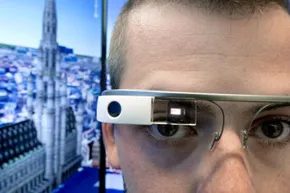
Google Glass is a prime example of current evolution. It is a computer shaped like eyeglasses. It includes an optical head-mounted display. In short, Glass does many things your smartphone does.
Use a voice command to display a map. Then swipe through driving directions. Glass has WiFi. But when you’re out of range, switch to Bluetooth. This connects to the Internet via your smartphone.
Specs matter. It has GPS. A camera. A microphone. 16GB of internal flash memory. Only 12GB is user accessible. You can conduct video calls. Send pictures and video clips. Check email. Post to Facebook and Twitter. And a whole lot more.
Glass is just one well-publicized incarnation of wearable technology — and it’s still in testing.
It is still in testing. On the next page you’ll delve into one of the biggest markets for body-mounted tech.
Body Trackers Galore
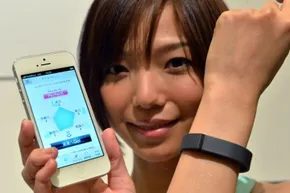
Wearable technology, by definition, stays on your body. It only makes sense then that most of these gadgets are obsessed with your health and fitness metrics.
Smart watches are the veterans here. They’re stylish, sure, but underneath the glass face lies serious utility. Integrated GPS logs your distance and time. Many versions track heart rate, cadence, and calories burned. But the tech wizardry is getting more magical. With the right sensor and power source, a wearable item can track just about any metric you want.
Smart medical devices already measure blood glucose levels in diabetics. This helps them monitor their condition and prevents life-threatening situations. Digitized wristbands could warn food service or medical technicians when they haven’t sufficiently washed their hands. That could prevent the spread of myriad diseases and improve public health.
Some products are already a reality. Take Cityzen Smart Sensing fabric. “Smart” because it combines tiny sensors into a comfortable garment. It can be anything from mittens to pants, depending on the application. Connect the garment to a compact, battery-powered transmitter. Turn on your smartphone’s Bluetooth connection. Suddenly you have a customized body monitoring system.
How Smart Sensing Fabric Works
The fabric communicates with an app on your phone to keep tabs on heart rate, respiration, and metrics. Ultimately, the system notes how tired or stressed you are. It could even alert you to the onset of a medical problem. In spite of its high-tech nature, you can wash and iron the Smart Sensing fabric normally [course: Haseltine].
Why This Matters for Everyday Users
You might think this is niche stuff. It isn’t. The shift from clunky trackers to integrated textiles changes how we interact with our own biology.
Before, you had to remember to wear a device. Now, the device is the clothing. You don’t think about it. You just live. That passive monitoring is where the real value lies. You get data without the friction.
Consider the implications for chronic disease management. Diabetics aren’t the only ones who benefit. What about heart patients? Or people with respiratory issues? Smart fabric offers continuous monitoring without the need for constant manual input. It’s less about logging data and more about letting the data find you.
The Privacy Trade-off
There’s a catch, of course. These systems collect intimate details about your bodily functions. Heart rate. Respiration. Stress levels. Who owns that data? Is it just for you? Or does it feed into broader health databases?
The convenience is undeniable. But the trade-off is visibility. You are being watched by your own clothes.
Where Do We Go From Here?
The line between health device and everyday clothing is blurring. Soon, your jacket might diagnose your flu before you feel the first chill. Your pants might detect irregularities in your gait that signal a neurological issue.
It sounds like science fiction. It’s not. It’s happening now. And it’s not just about fitness. It’s about safety. It’s about early detection. It’s about living longer, healthier lives.
But with that comes the responsibility of handling sensitive data. As these devices become more ubiquitous, the questions about privacy and security will become harder to ignore. We’re used to sharing our location. Are we ready to share
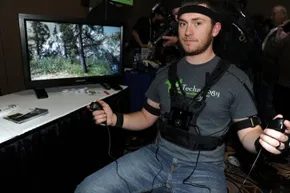
The gaming industry is currently operating at peak scale. Cinematic graphics are standard. Special effects blow your mind. But immersion still has a bottleneck. Control systems feel disconnected. You press a button. The character jumps. It’s not quite the same as being the character.
Enter PrioVR.
They are betting on a different approach. Less reliance on external cameras. More reliance on direct contact. Their system turns your body into the controller. You wear a suit. The suit tracks you.
The Body as Interface
The setup is physical. You strap on sensors. Depending on which model you buy, that number ranges from eight to seventeen inertial sensors. They attach to your limbs and torso.
Here is the mechanic: the sensors correlate your real-world movement to your on-screen avatar. Real-time. No lag.
Why does this matter? Standard motion capture relies on remote cameras or handheld controllers. Cameras miss nuance. Controllers limit range. PrioVR argues that wearable tech captures data directly from the source. Your muscles. Your bones. The company promises higher accuracy. Higher accuracy means smoother gameplay. Smoother gameplay means you stop thinking about the controls and start playing.
It is an attempt to bridge the gap between digital avatars and physical reality.
Analyzing the Swing
The same logic applies outside of fantasy games. It applies to sports. Specifically, the sports where mechanics are everything.
Take baseball. Or golf. Or tennis.
A bad swing is a bad swing, whether you are playing Madden or standing in a driving range. The difference is feedback. In the real world, you might feel off. You don’t know why. With Zepp, you get data.
Zepp is a small, square sensor. You stick it on your glove. Or your racket. Or your club. It’s unobtrusive. It recharges via USB. It connects to iOS and Android devices via Bluetooth.
The app does the heavy lifting. It provides immediate statistical feedback. Speed. Acceleration. Line of sight. Power output.
Breaking Down the Mechanics
For a golfer, the Zepp app doesn’t just say “good shot.” It breaks down the mechanics. You get data on:
- Club plane
- Hand plane
- Backswing distance
- Tempo
- Hip rotation
Numbers are useful. Visuals are better. The app includes an animated playback of your swing. You can watch it. You can see the flaw. You can correct it.
This is where fashion meets form. The hardware is small enough to hide in a pocket or glove. The software is powerful enough to replace a personal coach for basic drills. It turns every practice session into a data collection event.
Why This Shift Matters
We are moving past the era where motion control was a gimmick. The Nintendo Wii proved people would wave controllers around. But it lacked precision.
PrioVR and Zepp are addressing the precision gap. One focuses on total body immersion. The other focuses on micro-mechanics. Both rely on wearables. Both rely on smartphone connectivity.
The result is a hybrid experience. Physical effort. Digital insight.
Is this the future of training? Maybe. Is it the future of gaming? Already here, if you are willing to


Make it look good. That is the first hurdle for wearable tech. If it looks like a garage sale reject, people won’t wear it. Fashion dictates social signaling. You tell the world who you are with your clothes. No one wants to be seen with a Bluetooth headset anymore. It’s a dead style. Manufacturers know they need sex appeal. Otherwise, users face endless eye-rolls.
Take the Move tank top. It solves the aesthetics problem. It looks like standard yoga gear. Stretchy fabric. Sleek lines. But inside, it holds sensors and actuators. It monitors your workout form. Bend too far during a pose? The fabric buzzes that specific spot. Correct your posture. Avoid injury. You look cool while doing it. Function meets fashion.
Comfort is the next barrier. We all hate shirt tags. They scratch. They itch. Now imagine sensors woven into the weave. Skin recoils at the thought of constant irritation. Engineers are fixing this.
Researchers at the Polytechnic School in Montreal solved the itch factor. They created touch-sensitive controls. They coated copper wires with polymer. The wires are tiny. Less than a millimeter in diameter. They can be woven into textiles. And here is the kicker: they use legacy manufacturing processes. No new, expensive machinery required.
Imagine a shirt that changes your music volume with a swipe. Or a car seat that adjusts position with a touch. These fabrics wash like normal clothes. Dirt and stains do not ruin them.
Power is the missing link. Electronics are useless without juice. The same Montreal team developed a soft, flexible lithium-ion battery. It resembles artificial leather. It can be woven into garments. It provides hundreds of volts throughout the day.
Energy Harvesting from Movement
Piezoelectricity is another angle. It generates electricity from mechanical stress. Bending creates charge. These tiny components are also called nanogenerators.
Put them in clothes. Run for miles. Theoretically, you could help solve the energy crisis.
That sounds like science fiction. But dance clubs already use piezoelectric floors. People dance. The floor bends. The energy powers lights and sound systems.
Military applications are more practical. A soldier’s boots could have piezoelectric components. Each step generates power. It charges battlefield devices.
There is a catch. Piezoelectric materials produce weak discharges. We are talking millivolts and nanoamps. Not enough to power a laptop.
But harvesting and storage techniques are improving. We could capture that energy. Save it. Funnel it to power-hungry gear.
For a soldier or hiker stranded without outlets, this is huge. Walk around. Charge your satellite phone. Your GPS unit revives. A deadly situation becomes manageable.
This technology is still in the prototype stage. We need breakthroughs in research and manufacturing. Consumer-grade shirts that turn elbow grease into electricity might be years away.
Your Digital Self

We keep talking about the convergence of fabric and circuits. The vision is seductive: a wardrobe that tracks your vitals, connects to the cloud, and perhaps even charges your phone. Yet here we are. The revolution is stuck in gear.
Why aren’t these devices dominating our daily lives?
It starts with economics. Creating a digital twin of a physical object is expensive. Manufacturers face a brutal reality. Retooling production lines for smart textiles requires massive capital investment. They need volume to make it worth it. But volume requires demand. And demand requires affordability.
The Cost Barrier for Consumers
Consumers are willing to dream, but they hesitate at the checkout. Imagine wanting pants with wireless charging capabilities. It sounds like a gimmick until you see the markup. The technology adds cost. The materials add cost. The R&D adds cost.
Manufacturers know this. They won’t shift production until the profit margins are clear. And right now, the margins are risky. If the price tag is too high, the “cool factor” evaporates. You don’t buy a $500 pair of jeans just because they connect to Bluetooth.
The Necessity Question
Then there is the utility debate. Do we actually need augmented reality glasses?
Sure. They can show you walking directions. They can pop up restaurant reviews in your peripheral vision. But is this a necessary evolution? Or is it digital vanity?
Many of us crave the status of being connected. We want to impress friends who don’t have these gadgets. But status isn’t a use case. It’s a marketing angle. If the device doesn’t solve a painful problem, people won’t pay for it. We already have phones. We already have laptops. Adding another layer of complexity without a clear benefit is hard to justify.
Privacy and Security Risks
The stakes are higher with wearable tech. A phone is lost, stolen, or hacked. Your bank details might be at risk. But a health-monitoring device? That’s different.
Wearables collect intimate data. Heart rate. Sleep patterns. Location history. If that data is exposed, it’s not just financial damage. It’s personal violation.
Most of us have accepted that privacy is largely gone. We trade it for convenience. But with health data, the fear is real. A hack isn’t an inconvenience. It’s a breach of your physical self. This fear slows adoption. Users are wary of carrying their medical records in their pockets.
The Future of Integrated Tech
Despite these hurdles, the allure remains. Wearables are a fascinating experiment. They push the boundaries of what we consider “technology.”
One day, you might not own a separate phone. It might be woven into your shirt. You won’t lose it. You won’t forget it. It’s always there.
But until then, we’re stuck in the awkward middle ground. The tech is promising. The prices are prohibitive. The privacy concerns are valid.
We’ll keep watching. Waiting for the moment when the cost drops and the utility becomes undeniable. Until then, the smart closet remains a dream. A expensive, complicated, potentially risky dream.