The distance between silicon chips and synapses decreases. As computing power increases and our neurological understanding deepens, science fiction sheds its costume and becomes more concrete. It’s not about faster scrolling or smarter voice assistants. For severely disabled individuals, brain-computer interfaces (BCIs) represent a potential revolution in autonomy. This is a lifeline.
Picture sending visual or auditory information directly to the cerebral cortex. Imagine being able to control a robotic arm, a wheelchair or a cursor with just your will. There are no buttons. There is no switch. Just think. We take a closer look at how these systems translate electricity into action, where failures occur and what the future prospects look like.
Electronic brain
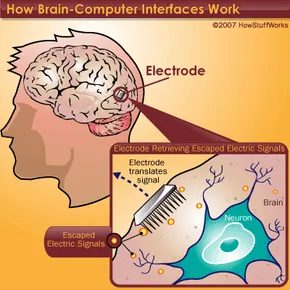
Brain-computer interfaces work because the brain is an electrical machine at its core. It is a dense network of neurons. These cells are connected by dendrites and axons. Every memory, action and feeling causes activity here. The speed is staggering. Signals travel from cell to cell at up to 250 miles per hour.
These pulses are generated by differences in ions across the membrane of neurons. This is the electric potential. Myelin insulates pathways and prevents crosstalk. However, the insulation is not perfect. Some electrical noise leaks out. Researchers are monitoring this leak. They decode the patterns. Then combine them with external commands.
The flow is two-way. This is not just reading intent. it’s feeding sensation back in. Think about your vision. When you see red, your optic nerve fires specific patterns. Researchers can reproduce this signal. Attach a camera. The red detection signal is fed directly to the brain. Blind people can perceive color even if their retinas don’t work. bypassing the broken hardware.
BCI input/output
The interface has two different parts. Input reads the brain. The output affects the world.
The input system captures neural data. They must be sensitive enough to pick up faint electrical whispers even in the constant noise of biological activity. The challenge is filtering. The brain is loud. Every heartbeat and breath causes interference. The algorithm must isolate specific spike patterns that correspond to intent.
Output systems execute the command. Once the brain’s desire have been decoded, the BCI translates them. A robotic hand closes. The text box is filled. The drone tilts left. The precision depends entirely on how well the input is interpreted.
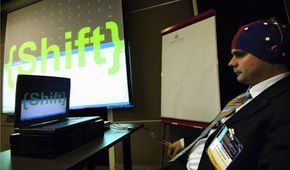
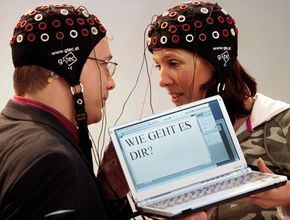
There are invasive and non-invasive routes. Invasive methods such as implanted electrodes provide high-fidelity signals but require surgery. Non-invasive caps are easier to use sit on the scalp, but the data quality is muddier. The choice determines who has access and the reliability of the controls.
Which path wins out? It depends on the needs of the user. Surgeons who require millimeter-perfect control can take the risk of risk implants. A gamer playing a thought-controlled game can stick to a headband. Although the technology is maturing, the trade-offs are still clear.
The goal is not just to read thoughts. It’s about creating a two-way street between mind and machine.
The implications extends beyond medical applications. Teaching computers to understand the neural syntax opens the door to memory augmentation, sensory expansion, and even new forms of communication. But hardware is only half the battle. The software has to interpret chaos.
Currently, the BCIs are clumsy. They require calibration. they are tired.
Signal decoding: From scalp sensors to brain implants
Hardware issues are still the main bottleneck in brain-computer interfaces. A non-invasive approach uses electroencephalography (EEG), which involves placing electrode caps on the scalp. It is easy to apply, it acts as a huge filter. Sure, it blocks out most electrical interference, but it also distorts the actual brain signals, making accuracy difficult.
For clarity, scientists go invasive. They placed the electrodes either directly on the gray matter or flat on the surface of the brain. The quality of the signal improves significantly when the device is placed in the place where the activity takes place. However, this approach comes at a high cost. Surgery is required. In the long term, scar tissue forms around the implant as the brain’s response to the attack. Scar tissue eventually insulates the electrodes and blocks the signal.
The physics remains the same regardless of whether the sensor is on the head or inside the cerebral cortex. The electrodes detect small voltage differences between neurons. Computers amplify noise, filter out static, and try to decipher patterns. Early analog machines used styluses to draw these waves on paper. Modern systems use software that converts spikes into commands.
Sensory input flips the script. Here BCI acts as a bridge from the digital world back to the brain. The camera takes a picture. The computer converts the visual information into a specific voltage pattern. These patterns are sent to the implant in the visual cortex. If the encoding is correct, the neuron fires. The subject doesn’t just see data; They see pictures.
Site mapping with magnetic resonance imaging
You cannot wear an MRI machine. It’s a huge, expensive super magnet. But it is indispensable for planning. The researchers used functional MRI to map brain activity before surgery.
Consider a patient who wants to control a robotic arm with their thoughts. Before drilling into the skull, they are placed in an MRI scanner. They were asked to imagine moving their left hand. The scanner illuminates specific areas that are responsible for that motor activity. Neurosurgeons now know exactly where to place the electrodes for maximum effectiveness. Without this map you are shooting in the dark.
The static brain myth
For decades, there was a belief that the adult brain was finished. This is a fixed structure. When growth stops, neural pathways stiffen. Sure, you can learn new tricks, but the hardware itself remains constant.
This theory died in the 1990s.
The discovery of cortical plasticity changed everything. This shows that the adult brain remains flexible. Redirect yourself in response to new experiences, learning, and hurt. When learning a language or recovering from a stroke, other parts of the brain step in to take over the damaged functions. New connections are made. Old ones prune away.
This flexibility is the secret sauce for BCI adoption. This means that adult patients are not fighting against a hard biological wall. Their brains can adapt to the interface. With implants, the brain eventually stops treating the foreign object like an invader. It integrates the device. Create new neural pathways around the electrodes and treat the electrodes as another part of your nervous system.
Although technology is moving from novelty to necessity, interface mechanisms are still at war with biology.
Consider the convenience of a regular remote control. Now imagine being able to change the channel without lifting a finger. Controlling a video game on it sounds like a trick. It’s a technology demonstration that dazzles the audience for a moment and then fades into the background. But this frivolous application is just the tip of the iceberg. The real stakes is much higher.
The ability to manipulate a computer cursor with mental commands is not a special trick for people with severe spinal cord injuries or locked-in syndrome. This is a lifeline. It represents a fundamental change in independence.
So how do we bridge the gap between the tiny electrical spikes in the brain and the physical movements of the robotic arm?
Train your brain to move machines
Early experiments did not begin with humans. The researchers used monkeys implanted with electrodes. At first, the monkeys used a physical joystick to control the robotic arm. The researchers monitored the neural signals generated during this process. They were looking for correlations between certain brain activity and certain movements.
Finally they removed the joystick. The monkey learned to control the robotic arm using only signals from the implant. This is a proof of concept. The brain can learn to overcome the need for physical input.
Applying this to humans, especially those with complete loss of motor function, is much more complicated. Users must be trained.
Consider EEG headset or an invasive implant. The subjects imagined that they were closing their right hand. Nothing happened physically. But the software is listening.
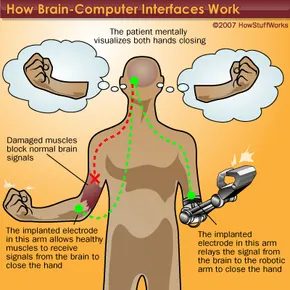
Over hundreds or thousands of trials, the machine learned specific neural codes associated with the idea of ”closing hand.” The software that comes with the robotic prosthesis is programmed to recognize this pattern. A signal is sent when the user has an idea. The robotic hand closes.
It’s a feedback loop. The brain learns to produce clearer signals. The software learns to interpret it more precisely.
Thinking in Coordinates
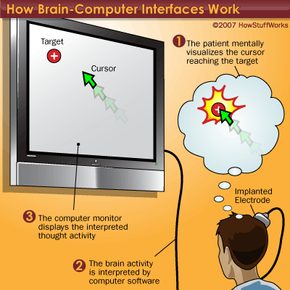
The same logic applies to cursor control. Instead of physical gestures, users think about the direction of movement: forward, left, right, backward.
With enough practice, users can learn precise control. You can draw a circle on the screen. You can start the application. You can navigate the menus and control the TV.
The theoretical end point? Typing.
Imagine being able to Typing an email at the speed of thought without using the keyboard at all. This is not science fiction anymore. This is the next logical step in the development of brain-computer interfaces.
Beyond prosthetics: restoring natural movement
Once the basic mechanisms for turning ideas into action are perfected, applications will scale rapidly. It is not limited to external robotic arms.
Disabled users can use robotic orthoses that attach to their limbs. These exoskeletons enable direct interaction with the environment and restore previously lost mobility.
However, there is a more direct way. This technology does not necessarily require a “robotic component”.
Researchers are looking for ways to completely bypass the damaged parts of the spinal cord. The body’s muscles are activated by sending signals directly to the nerves that control hand movements. When the user wants to move, the hand moves. No external devices are needed. The mind-muscle connection has simply been restored.
Looking Ahead: Seeing and Hearing
That’s just the motor side of the equation. The other side of sensory experience involves input.
We are already seeing progress in cochlear implants that restore hearing. The simultaneous development of artificial vision pushes the limits of eye perception.
BCI technology has come full circle to become more than just mobility. It’s about perceiving, sensing and interacting with the world in an native way. The distance between the mind and the machine decreases.
What would happen if this gap were to disappear completely?
While cochlear implants remain the most established and widely used brain-computer interface, they are far from the only application. To understand the full extent of brain-computer interface technology, we need to look beyond hearing aids to the visual cortex.
The mechanism begins with the normal hearing system. Sound waves travel through the ear, causing small organs to vibrate, and ultimately the auditory nerve converts these vibrations into electrical signals. When the physical structure of the ear is damaged, this chain breaks. Your nerves may be good, but they’re sitting in silence. Cochlear implants fill this gap. Bypass damaged hardware and convert sound waves directly into electrical impulses delivered directly to the auditory nerve. The result is not entirely faithful, but it is good enough to decode conversations.
Vision is a completely different beast.
Processing visual data requires a much more complex neural architecture than audio data. As a result, visual prostheses are less mature than auditory implants. However, its principles reflect the cochlear implant approach. Electrodes are implanted directly into the visual cortex, the area of the brain responsible for interpreting retinal signals.
The external hardware resembles glasses with a small camera. These cameras send video data to a computer, which processes the data and sends it to the internal implant. Users must undergo rigorous training, similar to the rehabilitation required for thought-controlled prosthetics, to learn how to interpret these new electronic patterns into images.
Is vision 20/20? No. However, it is a workable solution that has improved significantly since the first experiments in the 1970s.
Take Jens Naumann for example. When he became completely blind, he received a second-generation implant. The technology returned enough sensory input to allow him to navigate the New York subway system independently. He can also drive around the parking lot. This scene feels like it’s straight out of science fiction, but it’s rooted in today’s technology.
Naumann’s device bears a striking resemblance to the VISOR used by Geordi La Forge in Star Trek: The Next Generation. The external connector that connects his camera glasses to the brain electrodes is conceptually the same as La Forge’s device. The difference? Naumann sees the visible spectrum. He lacks the ability to detect infrared light and other invisible parts of the electromagnetic spectrum that the fictional VISOR can handle.
Fear of thought control
The ability to inject sensory information into the brain inevitably raises dark questions. If we can send signals, can we send commands as well? Is mind control really a risk?
The short answer is no.
Injecting simple sensory signals is technically difficult. At present, it is not possible to send complex involuntary motor commands that override a person’s free will. The nervous system complexity required to control certain actions is at odds with current technology.
There are also practical obstacles. Anyone who falls victim to involuntary thought control must be abducted and undergo extensive invasive brain surgery to implant electrodes. This is not going to happen discreetly. You may notice this process.
Therefore, despite advances in technology, dystopian scenarios of the mind’s remote control remain in the realm of fiction. So far, the Brain Computer Interface is a tools for restoration, not a coercion.
The brutal reality of brain-computer interfaces
Although we have covered the basic concepts of brain-computer interfaces, we want to make it clear that they are not yet fully functional. Friction has specific reasons.
The brain is a complicated mess. It is an exaggeration to say that thoughts are just electrical signals. You’re looking at about 100 billion neurons. They are constantly sending and receiving signals through a complex network. This process is primarily due to chemical processes that cannot be detected by ordinary brain waves. All they see is electricity.
Next is signal quality. It’s weak. EEG measures small electrical potentials. A subject’s eye blinks can produce a stronger signal than the actual brain activity you are trying to read. It’s like trying to hear a conversation in the middle of a hurricane. Improvements in implants and sensors will help, but for now, reading brain signals is noisy. Static electricity is everywhere.
Portability remains a challenge. Early systems were wired into a mainframe the size of a room. Although we’ve come a long way, some brain-computer interfaces still require cables. Wireless options typically require users to have a separate computer that weighs around 10 kilograms. It’s big. It will be lighter. It’s more wireless. But we’re not there yet.
Who builds brain-computer interfaces?
The field of BCI is developing rapidly. Several companies are emerging as significant players in this field. Although most innovations are still in the research and development phase, commercial applications are beginning to take shape.
Neuralink was founded by Elon Musk and is probably a visible name. They create implantable devices that bridge the gap between the brain and external hardware. The goal are twofold. One is the treatment of neurological diseases and the other is enabling advanced human-computer interaction. They overcame several important obstacles. There are ongoing clinical trials in humans, according to which severely disabled patients have regained movement and communication. This is an important step from theory to practice.
Synchron uses a different path. They are developing a minimally invasive brain-computer interface. The device can be implanted through a blood vessel instead of drilling a hole in the skull. This approach is aimed at paralyzed patients who want to control digital devices with their thoughts. Less invasive means less risk. This is a practical alternative to traditional open brain surgery.
This way you have a non-invasive players. CTRL-Labs is now part of Meta and researches wearable technology. They focus on converting nerve signals into commands using external devices. No implants. No surgery is needed. The goal of this path is to make brain-computer interfaces available not only for medical emergencies but also for everyday use.
These are no longer just science projects. These are prototypes for new ways of interacting with technology.
Why is this important now?
Brain-computer interfaces turn science fiction into technical problems. We don’t just dream of the “what”, we solve the “how”.
This promise involves more than just a remote control of the mind. It’s about the restoring agency. For people with severe disabilities, these interfaces can restore control over movement, sound and digital environments. This is a tangible improvement in the quality of life.
We are witnessing the early stages of this change as companies like Neuralink, Synchronhron and Meta continue to push the boundaries. It could redefine the way we interact with machines. We may regain our lost senses. We might also start thinking about user interfaces that currently require hands and eyes.
The challenges remain significant. signal noise. Hardware weight. Ethical issues concerning privacy and agency. But the foundation was laid today. The future, where BCIs become a part of everyday life, isn’t coming next year. But it will come.
Frequently asked questions
How does EEG BCI work?
Detects changes in brain function. Electrodes on the scalp record these signals. The software converts them into commands. Based on these mental inputs, you can move the cursor, type words or control robotic arms.
What is the Brain Computer Interface System?
It is a combination of hardware (sensors, implants) and software (signal processing, command mapping) that enables data transfer between the brain and the computer.
How is BCI implemented?
There are different methods. Electrodes can be placed on the scalp (non-invasive), on the surface of the brain (partially invasive) or inside the brain tissue (invasive). Data flows from the electrodes to a processor that interprets the purpose.
What are three brain-computer interfaces?
1. Invasive brain computer interface
2. Partially invasive brain-computer interface
3. Non-invasive brain-computer interface
The difference is in the location of the electrodes in relation to the skull and brain tissue. Invasive gives the clearest signal, but carries the greatest risk. Non-invasive is safe, but noisy. Partially invasive is somewhere in between.
Where next
If you are interested in learning more, search the Brain Computer Interface Project to see our research plan. Wired and Engadget have extensive hardware coverage. For biology, check out the resources on the brain and How Hearing Works to understand the sensory input we’re trying to bypass.
The sources range from reports on NASA’s mind-reading systems in the early 2000s to more recent reports on Neuralink human trials. This field is very young. Data is constantly evolving. stay tuned.