


Dale Dougherty didn’t set out to trigger a decades-long internet feud. He just needed a catchy title for an O’Reilly Media conference. He landed on “Web 2.0.” The label stuck. It stuck so hard that it created a vacuum, forcing everyone to define its predecessor: Web 1.0.
If version 2.0 implied an upgrade, an iteration, what did version 1.0 actually represent? Was it just the early days? Was it a specific technology stack? More importantly, do true Web 1.0 sites still exist today, hidden in the deep corners of the net, or was the transition total?
We’re going back to the source. Using O’Reilly’s original framework for Web 2.0 provides the clearest contrast. By understanding what Web 2.0 promised to fix, we can isolate the exact characteristics of Web 1.0. This isn’t just nostalgia. It’s about understanding the foundational shift from a static library to a dynamic platform.
The Static vs. Dynamic Divide
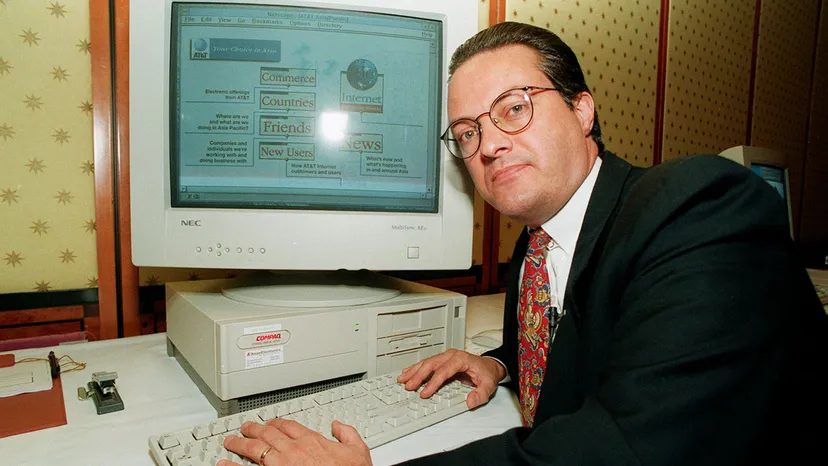
Web 1.0 wasn’t a formal standard. It was a retrospective label applied to the mid-to-late 1990s web. The defining trait was simplicity. Pages were static HTML files. They rarely changed. They were read-only documents published by creators and consumed by users.
Think of the early web like a digital magazine. You read it. You didn’t talk back to it. You didn’t edit it. You submitted a comment via an email form, and maybe, if the site owner had time, it got posted. Interaction was minimal. Data flow was one-way.
Web 2.0 flipped that script. It introduced interactivity. User-generated content. Social networks. AJAX. The web became a platform for running applications, not just a place to host pages.
Why the Distinction Matters Now
You might think this is ancient history. It’s not. The distinction explains why certain platforms feel “old” and others feel “new,” even if they use similar tech stacks.
Web 1.0 sites prioritize content. They are catalogs. Portfolios. Informational hubs. They load fast because they have nothing to load except text and images. Web 2.0 sites prioritize engagement. They are services. They require login credentials. They track your behavior. They update in real-time.
This shift has massive implications for how we view privacy, data ownership, and digital permanence. Web 1.0 was about publishing. Web 2.0 is about participating.
Are Any Web 1.0 Sites Still Online?
Yes. But you have to look for them.
They aren’t on the homepage of your browser. They’re the personal blogs that never got updated after 2004. The academic department pages that still list faculty from 1998. The small business sites that rely on basic HTML and haven’t added a comment section because they don’t want the spam.
These sites are still around because they serve a purpose. They are stable. They are secure (because there’s nothing to hack). They don’t require JavaScript to load. They don’t track your cookies.
However, the ecosystem has changed. Search engines have shifted away from crawling static HTML toward indexing dynamic content.

Tim O’Reilly didn’t just shrug off the term Web 2.0 after the first conference. He wrote a five-page manifesto on his blog. It was heavy with marketing jargon. Some readers found it more confusing than clarifying. But the core idea remained simple. Web 2.0 is about connection. It is about people linking with people, much like on Facebook.
Defining the predecessor, Web 1.0, is harder. It isn’t a single technological leap. It is a set of design and execution techniques. Some of these techniques date back to the early days of the World Wide Web. You cannot draw a clean timeline between the two eras. The definition of Web 1.0 relies entirely on what Web 2.0 rejects.
The Static Nature of Early Web Design
If Web 2.0 represents the most effective current approaches, Web 1.0 is everything else. O’Reilly defines effectiveness by user engagement. Do visitors return?
Web 1.0 sites typically feature static content. The information might be useful. But there is no reason to come back later. Consider a personal homepage. It might list the owner’s bio and interests. It never changes. A Web 2.0 alternative would be a blog or social profile. The owner updates it regularly. The content evolves.
Interactivity is another missing piece. In the Web 1.0 model, visitors are passive. They view. They do not contribute. Most corporate profile pages operate this way. You can read about the company. You cannot change the text. Contrast this with a wiki. It is a participatory platform. Anyone can visit and edit.
Proprietary Code vs. Open Source
Software development followed a similar divide. Web 1.0 applications were proprietary. Companies built software for users to download. The source code was hidden. Users could not see how it worked. They certainly could not modify it.
Web 2.0 embraces open source. The source code is freely available. Developers can inspect the logic. They can tweak the program. They can build new tools based on existing ones.
Netscape Navigator exemplifies the Web 1.0 approach. It was a closed browser. Firefox represents the shift. It provides developers with the tools to create new add-ons and applications. The ecosystem expands because the base is open.
Survival of the Fittest Strategies
O’Reilly points to the dot-com bubble for evidence. By looking at sites before and after the crash, you can see which strategies hold up. By 2000, investors were flooding money into unproven web startups. Many had no revenue model. The speculative bubble burst.
The companies that survived did so because their approach fit the web better. They learned from the failures of Web 1.0 pioneers. The survivors adopted strategies that prioritized user value and connectivity over simple presence.
When Web 1.0 is Right
Is adopting a Web 1.0 philosophy always a mistake? That is the question on the next page.


Web 1.0 feels archaic. It’s the era of the static brochure site. You click a link, you see text, you leave. It’s read-only. In a world dominated by Web 2.0—where user-generated content drives everything from social feeds to product reviews—asking if there’s any reason to build a Web 1.0 site sounds almost heretical.
But it does make sense. Sometimes, control matters more than collaboration.
The Case for Controlled Information
Web 2.0 thrives on interaction. Amazon lets you write reviews. These reviews shape future purchases. That feedback loop is powerful. It turns a product page into a community resource.
Yet, that openness isn’t always desirable. Consider a restaurant.
Its website serves one purpose: display the current menu. It might update weekly. It might change seasonally. But it should never allow diners to edit the menu. You don’t want customers posting comments about the price of the steak or suggesting new dishes in the HTML code. The menu is a statement of fact. It’s not a debate forum.
In these cases, a static Web 1.0 approach is superior. The webmaster retains full authority. The information is curated. It is what it is. No noise. No vandalism. Just the data, presented clearly.
The Risk of Open Editing
Wikipedia offers a counter-example. It’s built on the Web 2.0 principle of collective intelligence. Anyone can edit. Ideally, this leads to greater accuracy. Over time, errors get corrected. Nuance gets added. The truth emerges from the chaos.
But that ideal often fails.
Because the editing threshold is low, misinformation spreads fast. Trolls add false facts. Users add bias. Vandalism happens, sometimes for hours before it’s caught. Moderators work hard, but they can’t watch every page every second.
On any given day, a Wikipedia entry might be accurate. Or it might be nonsense. The credibility is conditional. It depends on the current state of the community’s vigilance.
For a business or institution, that uncertainty is a liability. A restaurant menu doesn’t need a consensus. It needs accuracy. A legal disclaimer doesn’t need user feedback. It needs clarity.
So, when do you choose static? When the cost of error is high. When the message must be consistent. When the audience shouldn’t be part of the conversation.
Web 2.0 is better for building communities. Web 1.0 is better for delivering facts. Knowing the difference saves you from letting users rewrite your rules.


The Shift to Official, Fact-Checked Knowledge
We often treat online information as a monolith, but the gap between crowd-sourced wikis and official encyclopedias is widening. Official entries operate on a rigid structure. Facts are verified. Authors are identified. The core mandate is objectivity.
This stands in stark contrast to platforms like Wikipedia. A Wikipedia edit can be driven by personal agendas, selective omission of facts, or outright falsehoods. You can use it as a launchpad. You should not use it as your only source. The reliability gap is real and impacts how we trust digital data.
Understanding the Web 1.0 vs. Web 2.0 Divide
The line between Web 1.0 and Web 2.0 isn’t just a timeline. It’s a functional shift. The old web is fading. New technologies prioritize interactivity and search engine dominance. Whether you believe these distinct versions exist matters less than understanding how to leverage them.
The debate over whether Web 1.0 is a real category or just a retrospective label is moot. What matters is using the web’s full potential.
Web 3.0 and the Semantic Future
Tim Berners-Lee, the architect of the World Wide Web, has a specific vision for the future. He calls it the semantic web. This is code that computers understand as well as humans do. It moves beyond human-readable pages to machine-readable data.
Web 3.0 also encompasses mobility. Smartphones are central to this shift. Artificial intelligence plays a key role in processing this data without relying on centralized databases.
Web 4.0 is still theoretical. Berners-Lee describes it as the symbiotic web. Imagine a future where the computer interface and the human brain communicate freely. Perhaps as equals. We aren’t there yet.
How Web Eras Compare
Users frequently search for clear distinctions between these web stages. The differences come down to interaction and control.
What is Web 1.0?
It was the earliest stage. Pages were static. They ran on ISP-hosted servers or free hosting services. Users could only read. This is why it is often called a flat page. There was minimal manipulation of elements. It was essentially “read-only” web.
Why is Web 1.0 considered flat?
You cannot interact with a flat page. You consume content. You do not create it. The user experience was stationary.
What is Web 2.0?
This era introduced ease of use and cross-device compatibility. The defining feature is user-generated content. Comments, posts, and uploads changed the dynamic. Experts call this the participatory web or social web. Platforms like Facebook, Amazon, and Uber define this space.
What are examples of Web 1.0?
MySpace and LiveJournal are classic examples. These sites were personal. They lacked the corporate infrastructure seen in modern platforms. They were digital diaries rather than interactive ecosystems.
What is Web 3.0?
Experts refer to it as the semantic web because pages are readable by machines. This allows for smarter data processing. It reduces the need for centralized data storage. AI drives the interpretation of this structured information.
Where to Go Next
The evolution of the web continues. Understanding these shifts helps you navigate the digital landscape more effectively. The tools change. The underlying need for reliable information does not.
For deeper dives into how these systems function, consider exploring:
– How BitTorrent Works
– How Blogs Work
– How Facebook Works
– How internet Infrastructure Works
– How internet Search Engines Work
– How Myspace Works
– How Operating Systems Work
– How Podcasting Works
– How Web Pages Work
The technology doesn’t stop. It just gets more complex. And you have to keep up.


