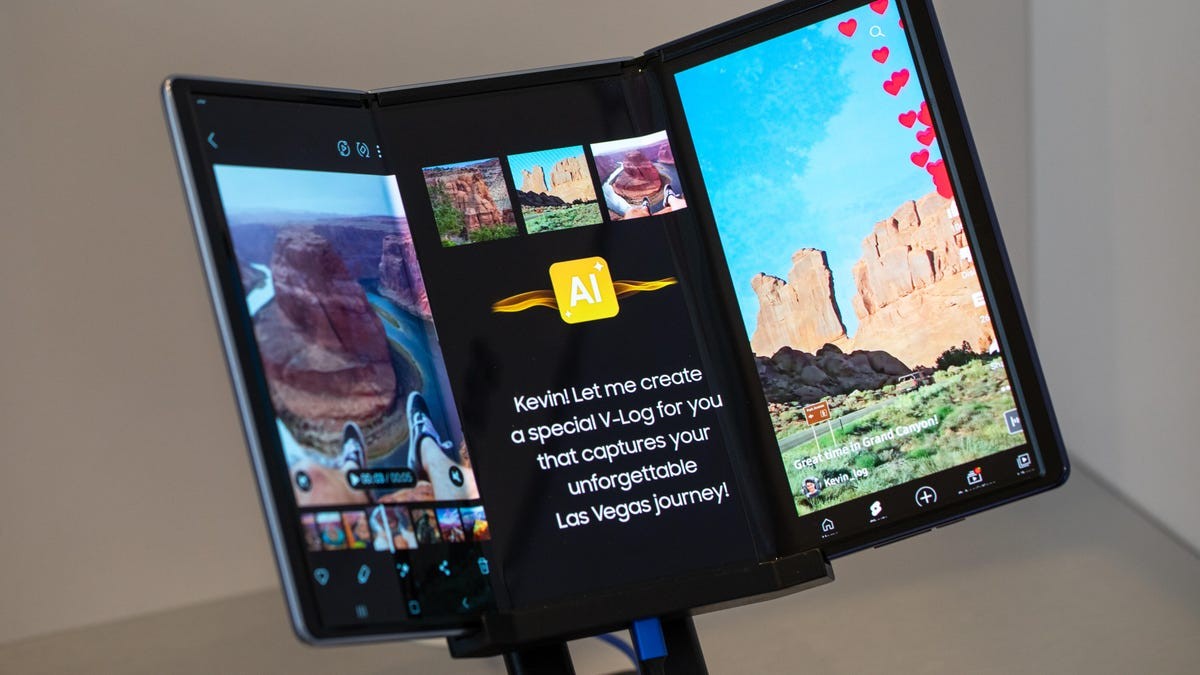
Samsung is gearing up to release its first consumer-ready triple-fold smartphone, revealed at the APEC CEO Summit in South Korea. The device, currently unnamed, will reportedly arrive in November or December, marking Samsung’s direct entry into a niche already occupied by Huawei. This move is significant because it demonstrates Samsung’s commitment to leading in foldable technology—a key battleground in the future of smartphone design.
The Evolution of Foldable Phones
Samsung has been a pioneer in foldable phones since 2019 with the original Galaxy Fold and the subsequent Z Flip series. However, Huawei has gained ground, launching its own tri-fold device, the Mate XT, in 2024. Samsung’s new product is a direct response to this competition, aiming to reassert its dominance in the high-end foldable market. The shift from single-hinge designs (like the Z Fold 7) to a dual-hinge system allows the phone to collapse to a compact size with a 6.5-inch outer screen, expanding to a tablet-like 10-inch display when unfolded.
Design and Key Features
The Samsung tri-fold differs from the Huawei Mate XT in its folding mechanism. While the Mate XT uses an accordion-style “Z” shape, Samsung’s design folds inward in what’s been described as a “G” shape. Despite Samsung’s branding of its foldable line as the Z-series, the company has not adopted that shape for this product. The prototype showcased includes front-facing cameras on both the inner and outer displays.
Pricing and Durability Concerns
The new device is expected to be even more expensive than the current Galaxy Z Fold 7, which starts at $2,000. Photos of the prototype raise questions about its durability, as Samsung has not demonstrated the folding process or addressed potential concerns regarding the two creases in the display. The company’s silence on these issues suggests a possible delay in finalizing the design for mass production.
The Bigger Picture
Samsung’s move underscores the growing importance of foldable phones as a premium market segment. This competition also places pressure on Apple, which has yet to enter the foldable space. If successful, Samsung’s tri-fold could set a new standard for mobile form factors and further cement its position as an innovation leader in the smartphone industry.
This launch is not just about another device; it’s about whether Samsung can continue to dictate the direction of smartphone design before competitors—including Apple—catch up.