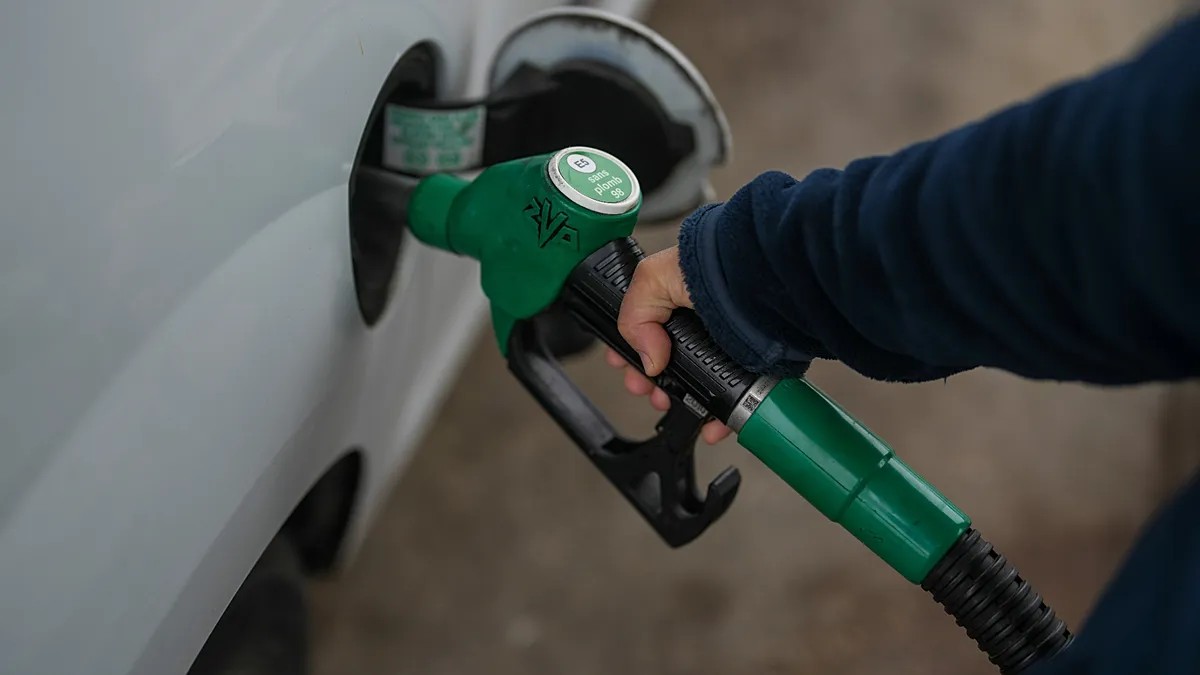
The geopolitical landscape in the Middle East has once again placed energy security at the forefront of European policy discussions. Following the conflict in Iran and subsequent disruptions to the Strait of Hormuz —a critical artery for global oil shipments—the International Energy Agency has identified this as one of the most significant supply disruptions in history.
For Europe, a continent heavily dependent on imported fossil fuels, this crisis is a catalyst for change. While renewables and traditional nuclear fission are the primary short-term alternatives, a more transformative technology is emerging on the horizon: nuclear fusion.
Understanding the Technology: Fission vs. Fusion
To understand the potential of fusion, it is essential to distinguish it from the nuclear energy most people are familiar with.
- Nuclear Fission: The current standard for nuclear power. It involves splitting the nucleus of a heavy atom (like Uranium) to release energy. While effective, it produces long-lived radioactive waste and carries significant safety concerns.
- Nuclear Fusion: The process that powers the sun. Instead of splitting atoms, fusion merges light atomic nuclei together.
The advantages of fusion are theoretically massive. According to the International Atomic Energy Agency (IAEA), fusion can generate four times more energy per kilogram of fuel than fission, and nearly four million times more energy than burning coal or oil. Furthermore, fusion offers a “cleaner” profile: it produces no CO2 emissions, generates no long-lived radioactive waste, and is inherently safer and more predictable than weather-dependent renewables.
The Stellarator Approach: Proxima Fusion’s Strategy
Despite its promise, fusion is not yet a commercial reality. The primary challenge lies in “net energy gain”—the ability to produce more energy than the massive amount required to trigger and sustain the reaction.
While many international projects, such as the ITER project, utilize tokamaks (doughnut-shaped devices), the Munich-based startup Proxima Fusion is betting on a different architecture: the stellarator.
| Feature | Tokamak | Stellarator |
|---|---|---|
| Design | Simpler, more common | Highly complex, harder to manufacture |
| Stability | Can be prone to instabilities | Intrinsically stable |
| Operation | Often pulsed/intermittent | Capable of continuous operation |
Francesco Sciortino, CEO of Proxima Fusion, notes that while stellarators are more difficult to engineer, they may be the superior choice for long-term commercial power plants due to their stability. The company is currently developing “Alpha,” a demonstrator device expected to operate in the early 2030s to test net energy gain. This will be followed by “Stellaris,” intended to be the world’s first commercial fusion station, targeted for the latter half of the 2030s.
The Economic and Geopolitical Stakes for Europe
For Europe, fusion is more than just a scientific milestone; it is a matter of strategic sovereignty. Unlike many other regions, Europe lacks vast natural fossil fuel reserves and faces economic challenges in scaling its solar and wind infrastructures.
Germany is positioning itself as a leader in this transition. Despite having phased out nuclear fission in 2023, the German government has signaled a massive pivot toward fusion. A recent government action plan aims to invest over €2 billion by 2029 to accelerate fusion development, with plans to host a commercial plant at the site of a former fission plant in Gudremmingen.
The Reality Check: Optimism vs. Economic Uncertainty
Despite the enthusiasm from startups and governments, scientific skepticism remains. A recent study published in Nature Energy suggests that the industry may be falling victim to “optimism bias.”
The debate centers on the “experience rate” —the speed at which technology becomes cheaper as it is deployed more widely.
– The Optimistic View: Some analysts predict costs will drop by 8–20% with each doubling of capacity.
– The Skeptical View: Researchers from ETH Zurich suggest the actual rate may be much lower, between 2–8%.
If the cost reduction is slower than anticipated, the economic viability of fusion could be delayed, making it a harder sell for private investors.
“We are at the stage where we are creating a new industry,” says Sciortino. “It’s about making sure that the supply chain invests in its own capabilities so that we can move this entire field faster than it has ever been.”
Conclusion
Nuclear fusion offers a potential “holy grail” for energy-poor regions like Europe, promising limitless, clean, and stable power. However, the path to commercialization remains a high-stakes race between groundbreaking engineering and the harsh realities of economic scalability.