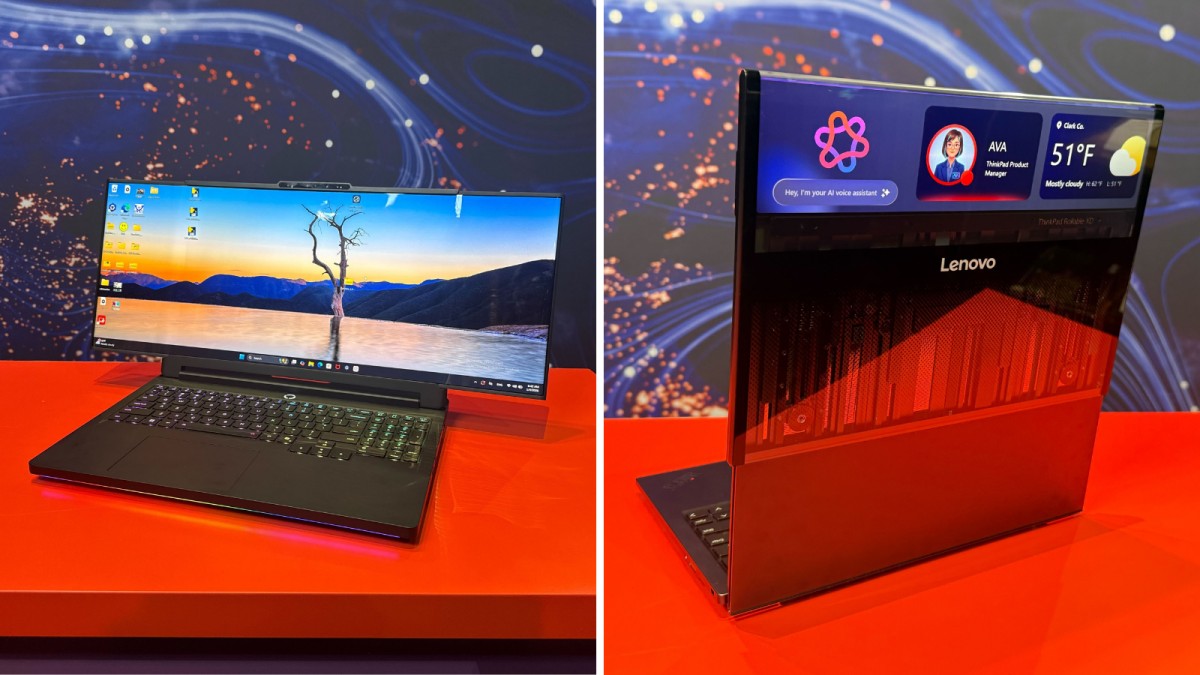
Lenovo showcased two innovative rollable laptop concepts at CES 2026: the business-focused ThinkPad Rollable XD and the gaming-oriented Legion Pro Rollable. These devices build upon last year’s release of the world’s first rollable laptop, the ThinkBook Plus Gen 6, demonstrating rapid progress in flexible display technology. The prototypes, while not yet finalized for market, signal a potential shift toward dynamically expanding screens in mainstream computing.
Expanding Screen Technology: A New Form Factor
Both laptops utilize flexible OLED panels, allowing the screens to extend and retract as needed. This approach offers a unique solution to the demand for larger displays without sacrificing portability.
The ThinkPad Rollable XD features a screen that expands from 13.3 to nearly 16 inches, increasing screen real estate by 50%. Its standout feature is a double-sided display, with the OLED panel wrapping 180 degrees over the lid to create a second “world-facing” screen. Lenovo partnered with Corning to develop a transparent glass cover that protects the flexible panel and showcases the internal rolling mechanism. The display can be controlled via touchscreen gestures or dedicated buttons.
The Legion Pro Rollable, designed for gamers, boasts an even more dramatic expansion capability. It can grow from 16 inches in “Focus Mode” to 21.5 inches in “Tactical Mode,” and a full two feet in “Arena Mode,” effectively creating a portable external monitor. This offers a more intuitive solution for gamers who prefer a larger screen without the need for a separate setup.
Engineering and Durability Considerations
While the prototypes appear polished, Lenovo acknowledges that further testing is necessary to ensure durability and stability. Some initial issues, such as skid marks and slight creasing on the Legion Pro Rollable’s screen, suggest that build quality improvements are needed before a commercial launch. However, Lenovo claims the Legion Pro Rollable is rated for 25,000 roll cycles, indicating a reasonable lifespan.
The internal mechanisms powering the rollable displays are visible, showcasing Lenovo’s engineering capabilities. The ThinkPad Rollable XD’s housing now contains the rolling mechanism rather than the base, improving aesthetics and functionality.
Gaming-Focused Features and Performance
The Legion Pro Rollable is equipped with high-end components, including Intel Core processors and Nvidia GeForce RTX 5090 GPUs, aligning with Lenovo’s Legion Pro 7i gaming laptop series. It also features RGB accent lighting, including a glowing keyboard, logo, and dynamic LED strips. Despite the impressive performance, the laptop generates significant heat during operation, which is a potential downside.
Market Outlook and Pricing
The arrival of Lenovo’s original rollable laptop two years after its initial concept suggests that these devices may become commercially available within the next few years. Given that the ThinkBook Plus Gen 6 retailed for nearly $3,500, potential buyers should expect a premium price point for future rollable models.
These rollable laptops represent a significant leap in display technology, offering a glimpse into the future of portable computing. While durability and production costs remain challenges, Lenovo’s latest prototypes demonstrate that the concept is no longer just a novelty but a viable path toward more versatile and adaptable devices.