


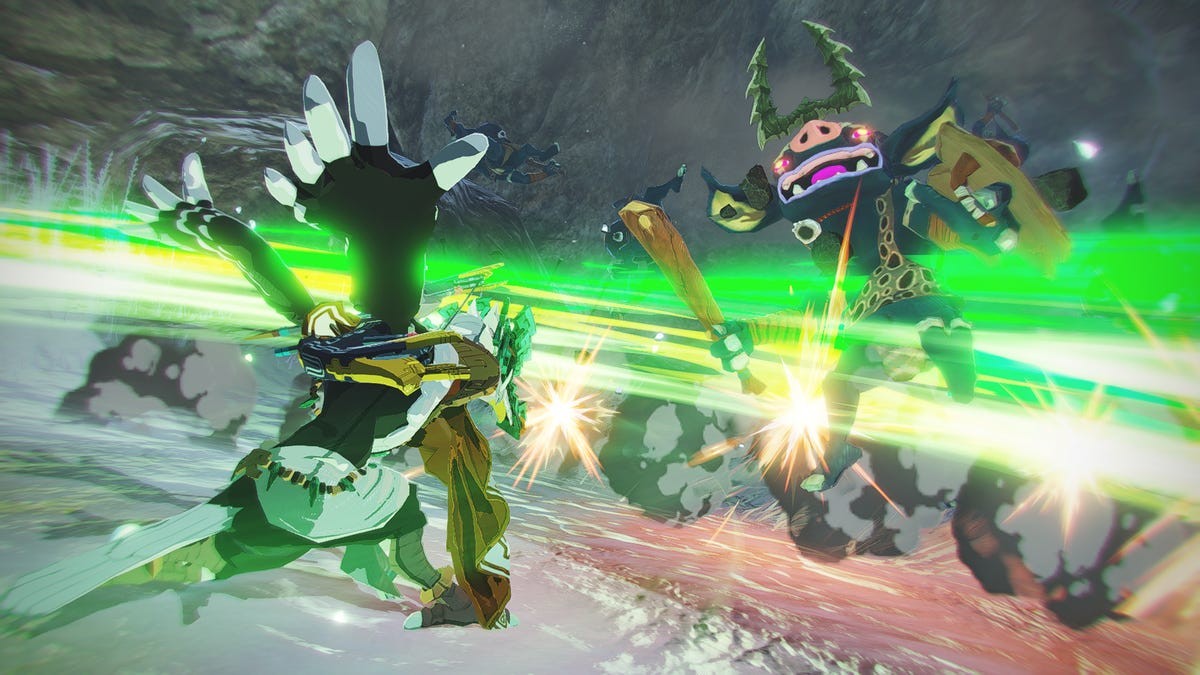
Nintendo’s latest Zelda -universe title, Hyrule Warriors: Age of Imprisonment, serves as an impressive technical showcase for the new Switch 2 console. Despite strong production values and a compelling story, the game’s repetitive hack-and-slash gameplay highlights the need for a full-fledged, next-generation Zelda experience on the platform.
Graphics and Immersion
The game’s upgraded graphics are a clear demonstration of the Switch 2’s capabilities. Age of Imprisonment feels authentically Zelda, with recognizable characters and a story that serves as a prequel to Tears of the Kingdom. Smooth animations and large-scale battles with hundreds of enemies run without noticeable slowdown, proving Nintendo’s new hardware can handle visually demanding titles.
The game also incorporates elements from Tears of the Kingdom, including sections in the depths and sky, mirroring the tri-level exploration that made the previous title so immersive. However, Age of Imprisonment maintains the series’ core gameplay loop of contained, mission-based battles, rather than the open-world structure fans expect from mainline Zelda games.
Repetitive Gameplay
The game’s combat is its main drawback. Players spend most of their time button-mashing through endless waves of enemies, which quickly becomes monotonous. While the unlockable roster of Hyrule characters adds variety, the core gameplay remains strategically shallow.
This isn’t necessarily a problem for existing Hyrule Warriors fans, who will likely appreciate the familiar formula. But for those hoping for a more innovative experience, Age of Imprisonment fails to deliver. The game feels more like a tech demo than a fully realized title.
A Mixed Success
As an early Switch 2 exclusive, Hyrule Warriors: Age of Imprisonment is a partial success. It proves Nintendo’s new console can handle visually impressive games, but doesn’t fully capitalize on the potential of a true next-gen Zelda title. The game is outshined by other launch titles like Donkey Kong Bananza and Mario Kart World.
Ultimately, Age of Imprisonment leaves players wanting more. It hints at the possibilities of a future Zelda game on the Switch 2, but doesn’t satisfy the desire for exploration, puzzles, and the sense of wonder that define the series. The game demonstrates what a true next-generation Zelda could be, but Nintendo has yet to deliver it.


