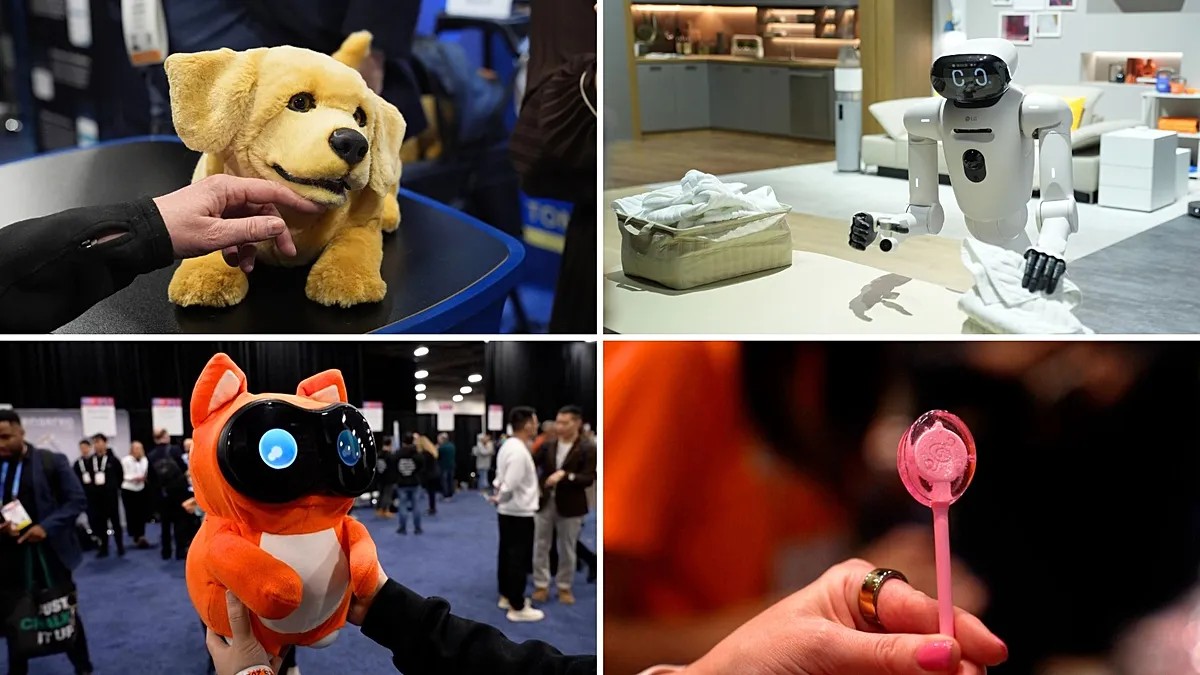
CES 2026 in Las Vegas is showcasing a wave of innovation, ranging from the practical to the purely bizarre. With over 4,500 exhibitors – including 1,400 startups – the event highlights how quickly technology is evolving, and sometimes, how… oddly it’s evolving. This year’s show includes everything from musical lollipops to AI-powered robots designed to handle household chores. Here’s a breakdown of the most attention-grabbing (and eyebrow-raising) gadgets.
Sensory Overload: The Musical Lollipop
One of the most unexpected innovations is the Lollipop Star, a candy that plays music as you eat it. Using “bone conduction technology,” the lollipop transmits vibrations through the jaw and skull, creating an auditory experience similar to headphones. The company’s spokesperson, Cassie Lawrence, explained that it’s “a fun novelty product” featuring tracks from artists like Ice Spice and Akon.
This highlights a broader trend: merging entertainment with everyday consumption. While niche, it shows how companies are exploring new ways to engage consumers through unexpected sensory experiences.
AI Assistants: From Laundry to Labor-Free Homes
LG unveiled CLOiD, an AI-powered home assistant with human-like arms capable of performing chores like laundry and cooking. The company markets this as a step toward a “Zero Labour Home,” though the robot’s speed isn’t yet comparable to human efficiency.
This reflects a growing push for automation in domestic tasks. LG’s CLOiD is part of a larger movement to integrate AI into everyday life, but the practical limitations suggest full automation is still years away.
The Digital Doppelganger: AI Twins for Work
IgniteTech’s MyPersonas allows companies to create AI-powered digital twins of employees. These replicas can handle routine tasks, answer questions, and even replicate speech patterns in 160 languages. The company frames this as a solution for overworked HR teams, but the concept raises ethical concerns about authenticity and potential misuse.
This technology represents a significant leap in AI replication, but the “Black Mirror” implications are hard to ignore. It underscores the need for clear guidelines on AI identity and usage in professional settings.
Emotional Support: The Robotic Labrador
Tombot’s Jennie, a lifelike robotic Labrador, is designed to provide emotional support for individuals who cannot care for real pets. The robot responds to touch and voice commands, offering companionship without the responsibilities of pet ownership. CEO Tom Stevens developed the idea after his mother, who had Alzheimer’s dementia, lost her beloved dog.
This innovation addresses a genuine need for emotional connection, especially for those with limited caregiving capacity. The over 20,000-person waitlist speaks to the demand for realistic robotic companions.
High-Tech Kitchen Tools: The Vibrating Chef’s Knife
Seattle Ultrasonics’ C-200 chef’s knife uses ultrasonic technology to vibrate the blade at over 30,000 times per second, reducing cutting effort. The company claims this allows for sharper cuts even with a dull blade. Caitlin Sanders, a spokesperson, notes that steel technology is plateauing, making ultrasonic enhancements a viable alternative.
This represents a niche but intriguing upgrade to a traditional tool. The vibrating knife demonstrates how even established products can benefit from unexpected technological integrations.
AI-Powered Grooming: The Smart Hair Clipper
Glyde’s smart hair clipper uses AI to prevent uneven cuts by sensing speed, tilt, and angle. Users select their desired hairstyle in an app, and the clipper adjusts in real-time. This addresses a common pain point: botched DIY haircuts.
The device illustrates how AI can improve precision in personal grooming, potentially disrupting the traditional barber industry.
The Spectacle: Dancing Robots and Humanoid Demonstrations
Boston Dynamics showcased its Spot robot dogs dancing to K-pop at Hyundai’s press conference, followed by the public debut of its humanoid robot Atlas. The event was designed for spectacle, but it also highlighted the company’s progress in robotics.
This theatrical demonstration underscores the growing excitement around advanced robotics, even if the practical applications remain limited. The dancing robots serve as a symbol of the industry’s playful exploration of AI and automation.
In conclusion, CES 2026 offers a glimpse into a future where technology blurs the line between practical utility and bizarre novelty. While some innovations aim to solve real-world problems, others push the boundaries of what’s possible – and sometimes, what’s necessary. The show serves as a reminder that the tech industry thrives on both innovation and imagination.