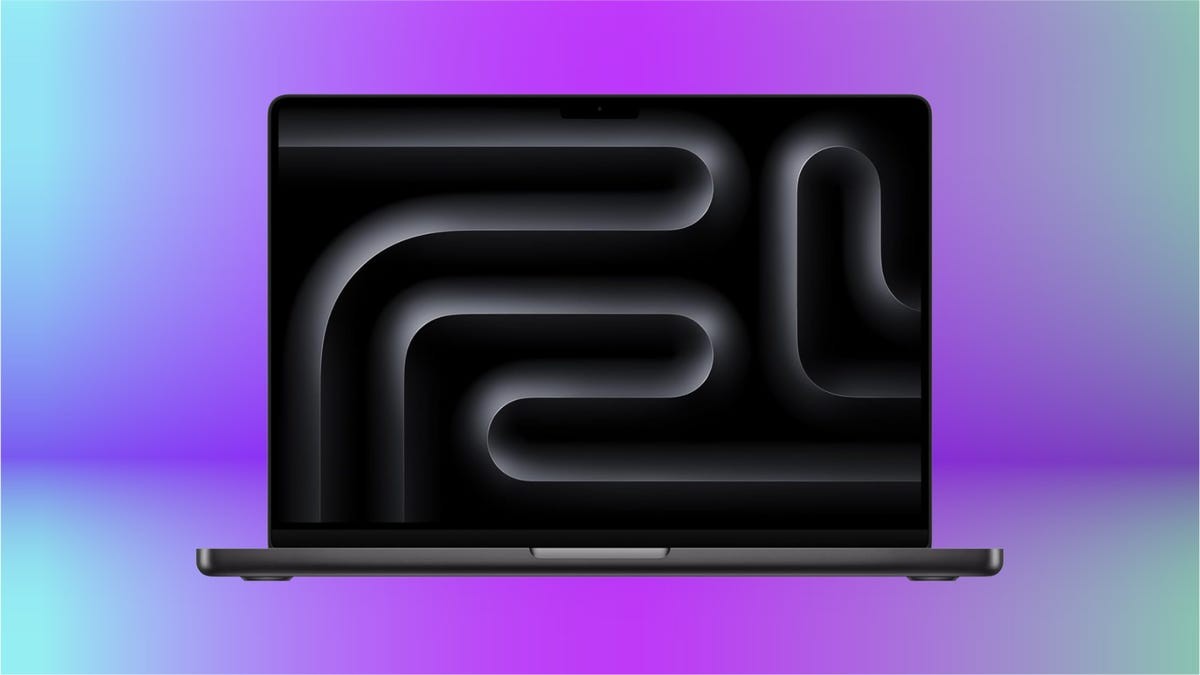
Apple has released the M5 processor, updating the baseline 14-inch MacBook Pro while leaving other models in the lineup on older silicon. This move puts the entry-level Pro ahead of higher-end configurations in terms of processing power, an unusual positioning for Apple’s product tiers. The update comes less than a year after the M4 chip debuted, first in the iPad Pro and later in select MacBook Pros, suggesting Apple is accelerating its chip release cycle.
M5 Performance Claims
The M5 chip retains the 10-CPU and 10-GPU core configuration of its predecessor but introduces a Neural Accelerator in each GPU core. Apple claims this results in up to 3.5x faster AI performance compared to the M4 and up to 6x faster than the older M1 chip.
Beyond AI, Apple highlights performance gains in professional applications:
- Up to 1.6x faster graphics in pro apps
- Up to 1.6x higher frame rates in gaming
- 20% faster multithreaded performance
- Up to 1.8x faster AI video enhancement (Topaz Video)
- Up to 1.7x faster 3D rendering (Blender)
- Up to 1.2x faster build times (Xcode)
Storage speeds have also doubled, with up to 4TB of storage now available.
Pricing and Availability
The updated M5 MacBook Pro starts at $1,599, the same price as the previous generation. It includes 16GB of RAM and a 512GB SSD. The design and display remain unchanged, featuring a 14.2-inch mini-LED Liquid Retina XDR display with a 3,024×1,964 resolution.
Preorders begin today, with shipping scheduled to start on October 22. Battery life is expected to remain competitive, offering up to 24 hours on a single charge.
Current MacBook Lineup: A Mixed Landscape
Notably, the M5 update only applies to the baseline 14-inch MacBook Pro. Higher-end 14-inch models still rely on the M4 Pro, and all 16-inch MacBook Pros are equipped with either M4 Pro or M4 Max chips. The MacBook Air line also remains on the M4 platform. This creates an unusual situation where the least expensive MacBook Pro boasts the newest silicon. Apple may address this discrepancy in future updates, but for now, the decision of which MacBook to buy requires careful consideration of performance needs versus budget.