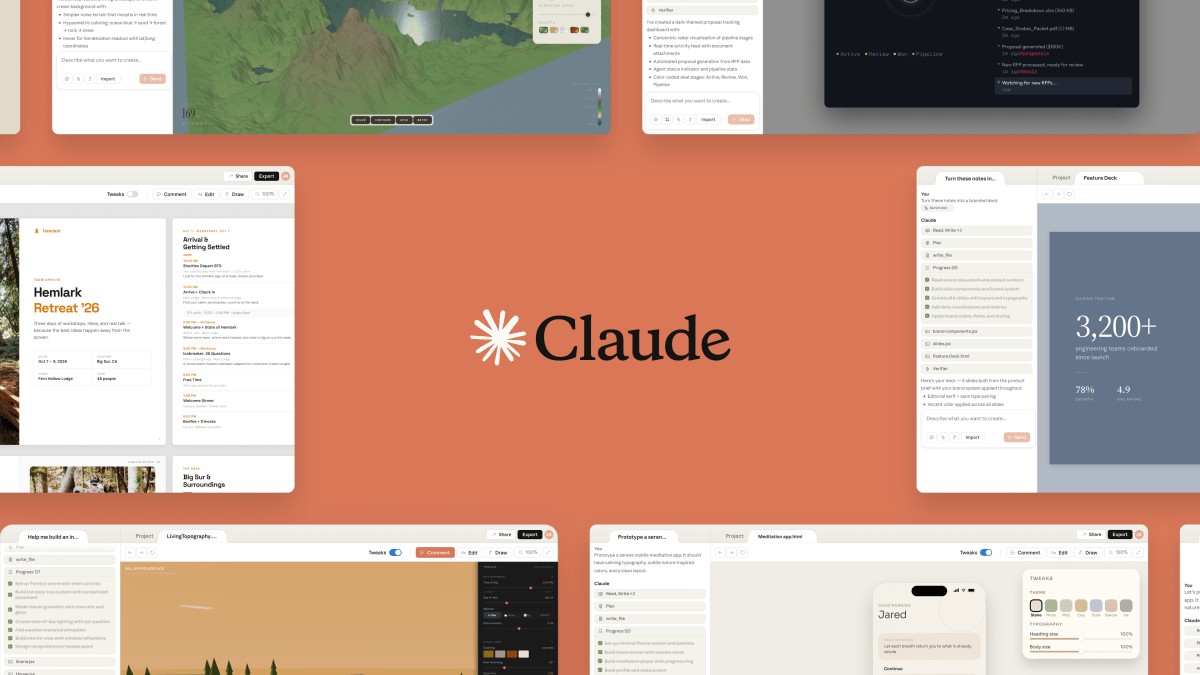
Anthropic has officially entered the visual creation space with the launch of Claude Design, an experimental product designed to turn text descriptions into functional visual assets. Aimed at bridging the gap between abstract ideas and tangible designs, the tool allows users to generate prototypes, presentation slides, and one-pagers through simple conversational prompts.
Bridging the Gap for Non-Designers
The primary target audience for Claude Design is not professional graphic designers, but rather founders, product managers, and business leaders who lack formal design training. The tool is built to solve a common productivity bottleneck: the time it takes to move from a conceptual idea to a visual representation that can be shared with stakeholders.
The workflow is intuitive:
– Generation: Users describe a concept (e.g., “Create a prototype for a serene mobile meditation app with calming typography and nature-inspired colors” ).
– Refinement: Users can iterate on the initial version by requesting specific changes, such as adjusting font sizes, tweaking color palettes, or adding features like a “dark mode” toggle.
– Consistency: For established companies, Claude Design can ingest existing codebases and design files to apply a specific team design system, ensuring all new visuals remain brand-compliant.
A Complementary Tool, Not a Canva Replacement
While the arrival of an AI-driven design tool might suggest direct competition with platforms like Canva, Anthropic is positioning Claude Design as a precursor to the professional design phase.
Rather than replacing dedicated design software, Claude Design acts as a high-speed ideation engine. Once a prototype or deck is created, users can export their work as PDFs, URLs, or PPTX files, or even send them directly to Canva for advanced, collaborative editing. This creates a seamless pipeline from “idea” to “refined asset.”
The Broader Strategy: Moving Toward the Enterprise
The launch of Claude Design is a strategic move in Anthropic’s broader campaign to capture the enterprise and “prosumer” markets. As the AI industry shifts from simple chatbots toward specialized workplace assistants, Anthropic is building a suite of “agentic” tools designed to handle complex, professional workflows.
This follows a recent pattern of expansion for the company:
– Claude Cowork: An agentic assistant designed for complex, multi-step tasks.
– Agentic Plug-ins: Specialized tools within Cowork that automate specific departmental functions.
By adding visual prototyping to this ecosystem, Anthropic is positioning Claude as a central hub for professional productivity, capable of handling both text-based logic and visual communication.
Availability
Claude Design is currently available in research preview for users subscribed to Claude Pro, Max, Team, and Enterprise tiers. The product is powered by the high-performance Claude Opus 4.7 model.
Conclusion: Claude Design represents Anthropic’s attempt to move beyond text generation and into the realm of functional business utility, offering a rapid way for non-designers to visualize ideas while maintaining professional brand standards.