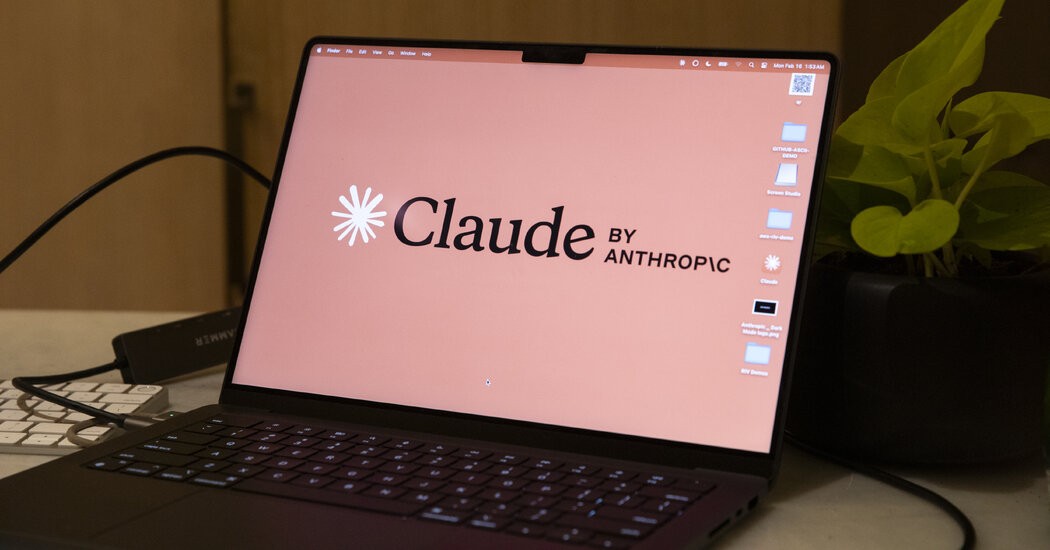
Anthropic, a leading artificial intelligence developer, has announced the creation of a new model called Claude Mythos Preview. However, in a move that signals a shift in how high-capability AI is managed, the company has decided not to release the model to the general public.
Instead, Anthropic is limiting access to a specialized group of industry leaders to address a growing concern: the potential for advanced AI to be used as a weapon for cyber warfare.
Project Glasswing: A Defensive Coalition
Rather than a wide-scale launch, Anthropic is deploying Mythos through a consortium known as Project Glasswing. This group consists of over 40 major technology players, including:
- Tech Giants: Apple, Amazon, Microsoft, and Google.
- Hardware & Infrastructure Providers: Cisco and Broadcom.
- Open-Source Guardians: The Linux Foundation.
The objective of this coalition is to use the model’s advanced reasoning capabilities to identify and patch security vulnerabilities in critical software and infrastructure before they can be exploited by malicious actors. To support this initiative, Anthropic is committing up to $100 million in Claude usage credits to the project.
Why This Matters: The AI “Reckoning”
The decision to withhold Mythos from the public highlights a growing tension in the AI industry: the balance between innovation and safety. As models become more capable of understanding complex code, they become dual-use technologies. While they can help developers secure software, they can also be used by hackers to discover “zero-day” vulnerabilities—flaws that are unknown to the software creators.
Anthropic’s leadership suggests that we are approaching a critical turning point in cybersecurity.
“The goal is both to raise awareness and to give good actors a head start on the process of securing open-source and private infrastructure and code,”
— Jared Kaplan, Anthropic’s Chief Science Officer
Logan Graham, head of Anthropic’s safety testing team, described the release as a “reckoning” for the industry. This implies that the current methods of software security may no longer be sufficient in an era where AI can automate the discovery of complex exploits.
A Shift in AI Governance
By restricting Mythos to a vetted group of “good actors,” Anthropic is attempting to set a precedent for how “frontier models”—AI that possesses potentially dangerous capabilities—should be handled. This approach moves away from the traditional “open release” model toward a more controlled, collaborative defense strategy.
This move raises significant questions for the future of the industry:
– Will other AI developers follow this restrictive model for highly capable tools?
– Can a private consortium effectively protect the global digital infrastructure?
– How will the gap between “defensive AI” and “offensive AI” evolve?
Conclusion
Anthropic’s decision to restrict Claude Mythos signals a new era of AI development where the power to secure software is viewed as too dangerous to be left in the hands of the general public. Through Project Glasswing, the company is attempting to build a defensive shield to stay one step ahead of AI-driven cyber threats.