


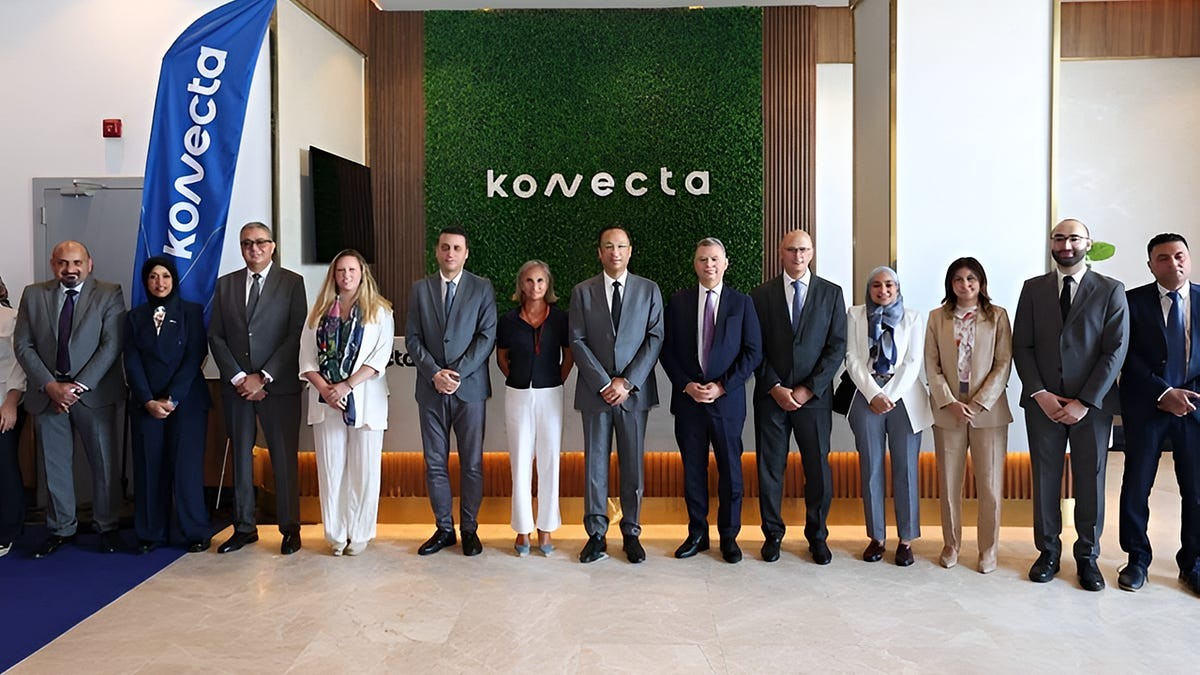
A Spanish outsourcing giant has just dropped $100 million in the middle of New Cairo. Konecta isn’t just opening a call center here. It is building its first global center of excellence for generative AI. That distinction matters. Most firms use Egypt for cost-saving support. Konecta is using it for product development.
The facility, officially opened by Egypt’s Minister of Communications and IT H.E. Raafat Hindy now sits at the intersection of two major trends: the rush for cheaper tech labor and the boom in AI development.
Why Konecta chose Cairo for AI development
The move goes beyond standard business process outsourcing (BPO). Ahmed Al-Harrany, Konecta’s Vice Chairperson for the Middle East and Africa made sure to clarify that this is not just an operational site. It is a place where Egyptian teams will directly work on localizing Konecta’s core AI products. Specifically, the Kolibri agentic AI platform will benefit from this local expertise.
For Cairo officials, this is the holy grail of foreign direct investment (FDI). Moving from service delivery to product creation lifts the country up the value chain. It shifts Egypt from a place that takes calls to a place that builds intelligence.
The launch follows a memorandum of understanding signed in January 2025 between the Egyptian Information Technology Industry Development Agency (ITIDA) and Konecta. Prime Minister Mostafa Madbouly was present at the signing. That kind of high-level government backing signals a serious commitment to the tech sector’s growth.
How the Konecta Cairo hub operates
The hub will not serve just the local market. It acts as a bridge for clients across the Middle East, Africa,Europe, and the Americas. The services provided are a mix of traditional support and high-tech innovation:
- Digital customer experience
- Generative AI solutions
- Data analytics
- Technical support
- IoT services
Currently, the regional headquarters employs 800 specialists. They work in seven languages: Arabic, English, French, German, Spanish, Italian, and Dutch. That multilingual capability is a key asset for a company serving diverse global markets.
But 800 is just the start. Konecta plans to swell the local workforce to roughly 3,000 employees by the end of 2029. Wait, the source said end of 2028 for 3,000. Let me stick to the facts. By the end of 2028, the team will hit the 3,000 mark. That is significant job creation in a market hungry for skilled tech roles.
Where does Egypt stand in the global AI race?
You might wonder why now? Why Egypt? The timing aligns with a global recognition of the country’s readiness for AI integration. In June, talent firm Ataraxis released the inaugural Global Outsourcing AI Readness Index.
Egypt ranked 16th globally.
It is the second-best performer in Africa, trailing only South Africa. The index looks at four main areas:
1. Population AI adoption
2. Workforce AI literacy
3. Enterprise AI adoption
4. Strength of the AI education pipeline
Eight African countries cracked the global top 25. You have Nigeria, Kenya, Morocco, and Ghana on the list. This puts Egypt in good company. It proves that the region is not just waiting for AI; it is actively preparing its workforce for it.
Konecta, founded in Madrid in 2001 (correction: 1999 as per source), is a massive player. It employs 109,00 people in 28 countries and offers services in 40 languages. This $100 million expansion is a strategic bet on Egypt’s ability to deliver high-value digital services. Minister Raafat Hindy noted that this expansion reflects Egypt’s broader efforts to attract such investment.
The infrastructure is there. The talent pool is expanding. The government is signaling approval. Konecta’s arrival adds a significant layer of credibility to Cairo’s ambitions to become a global tech exporter.
Will the workforce grow fast enough to meet demand? Maybe. The plan is ambitious. But if history is any guide, Cairo’s tech sector tends to surprise those who bet on it. The real test will be whether local universities and training programs can feed the pipeline with the specific AI skills Konecta needs. Or if they will keep training generalist BPO workers.
One thing is clear. The era of using Egypt solely for cheap labor is ending. The era of using it for smart labor has begun.


